Integrating Gender Equity and Inclusive Practices for Just and Sustainable Energy Transitions: Reflections from a day of critical dialogue, collective learning and inclusive problem-solving
Written by: Dr Rihab Khalid, Dr Serena Saligari and Dr Samir Thapa (Loughborough University)
In this article, JustGESI team members Dr Rihab Khalid and Dr Serena Saligari, together with colleagues from Loughborough University, share reflections from a workshop on integrating gender equity and inclusive practices in just and sustainable energy transitions, which they organised with support from the ERA/C-DICE Community Fund at Loughborough University. This article was originally published on the MECS website and is reposted here with permission.
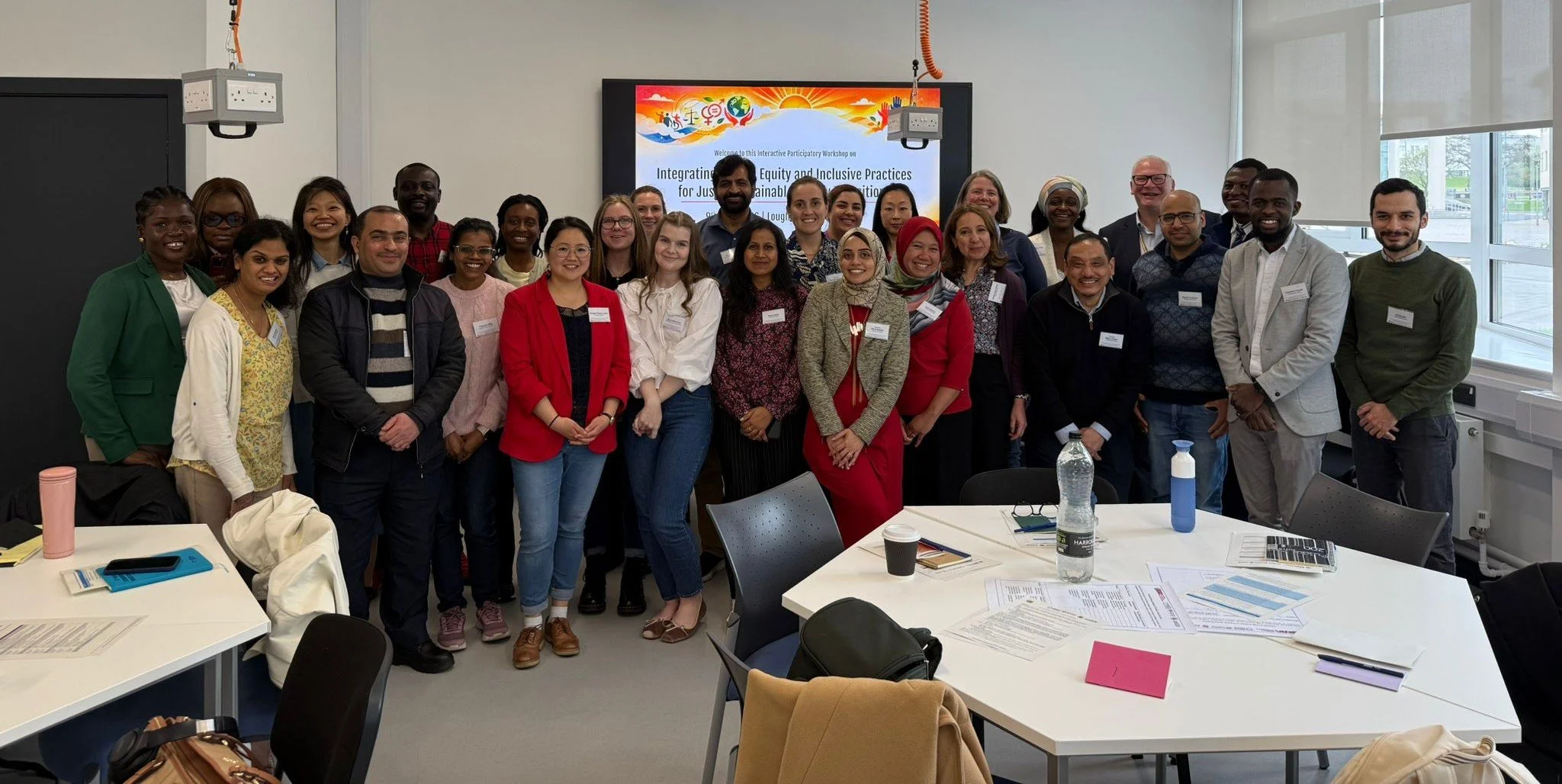
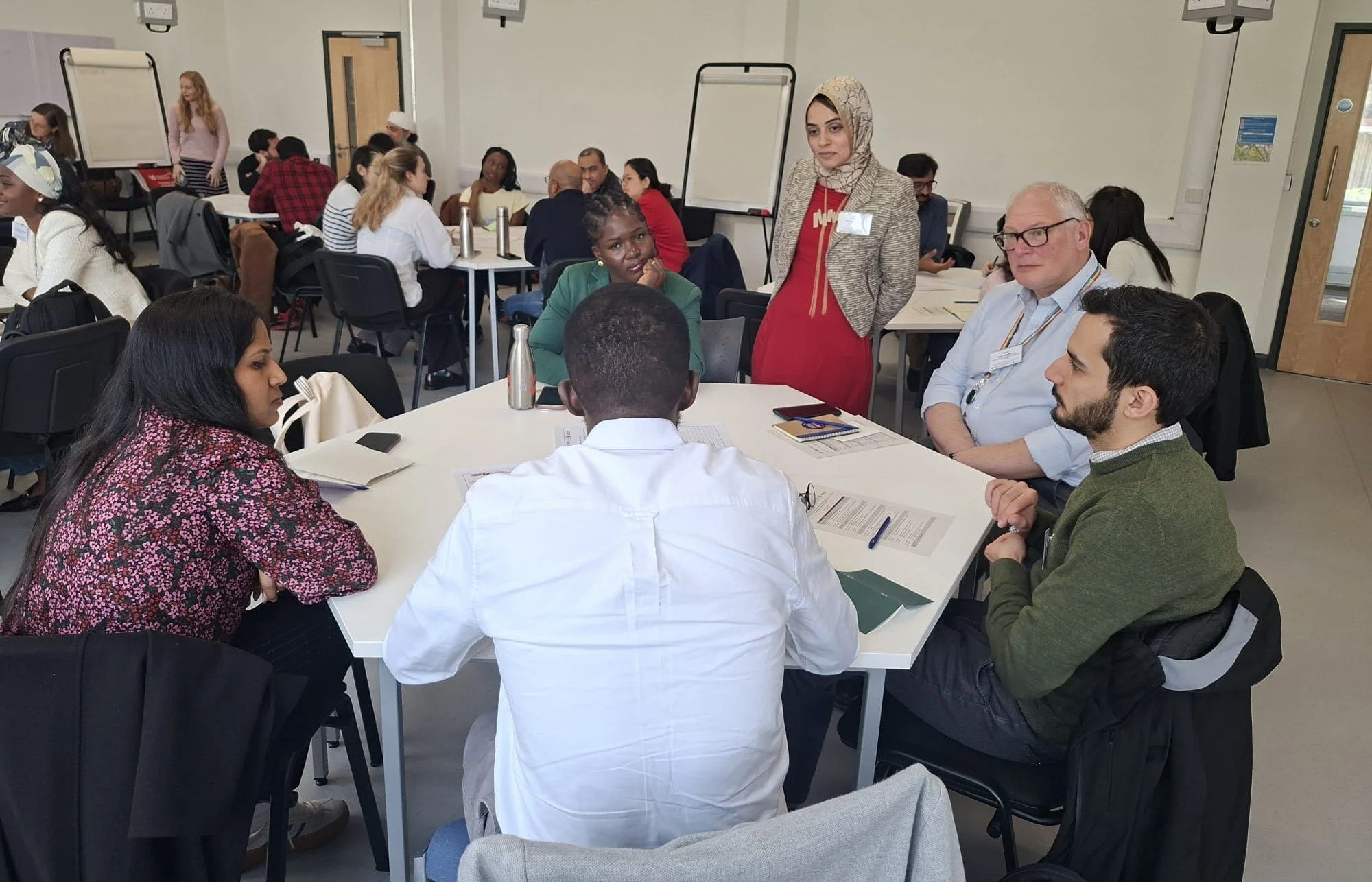
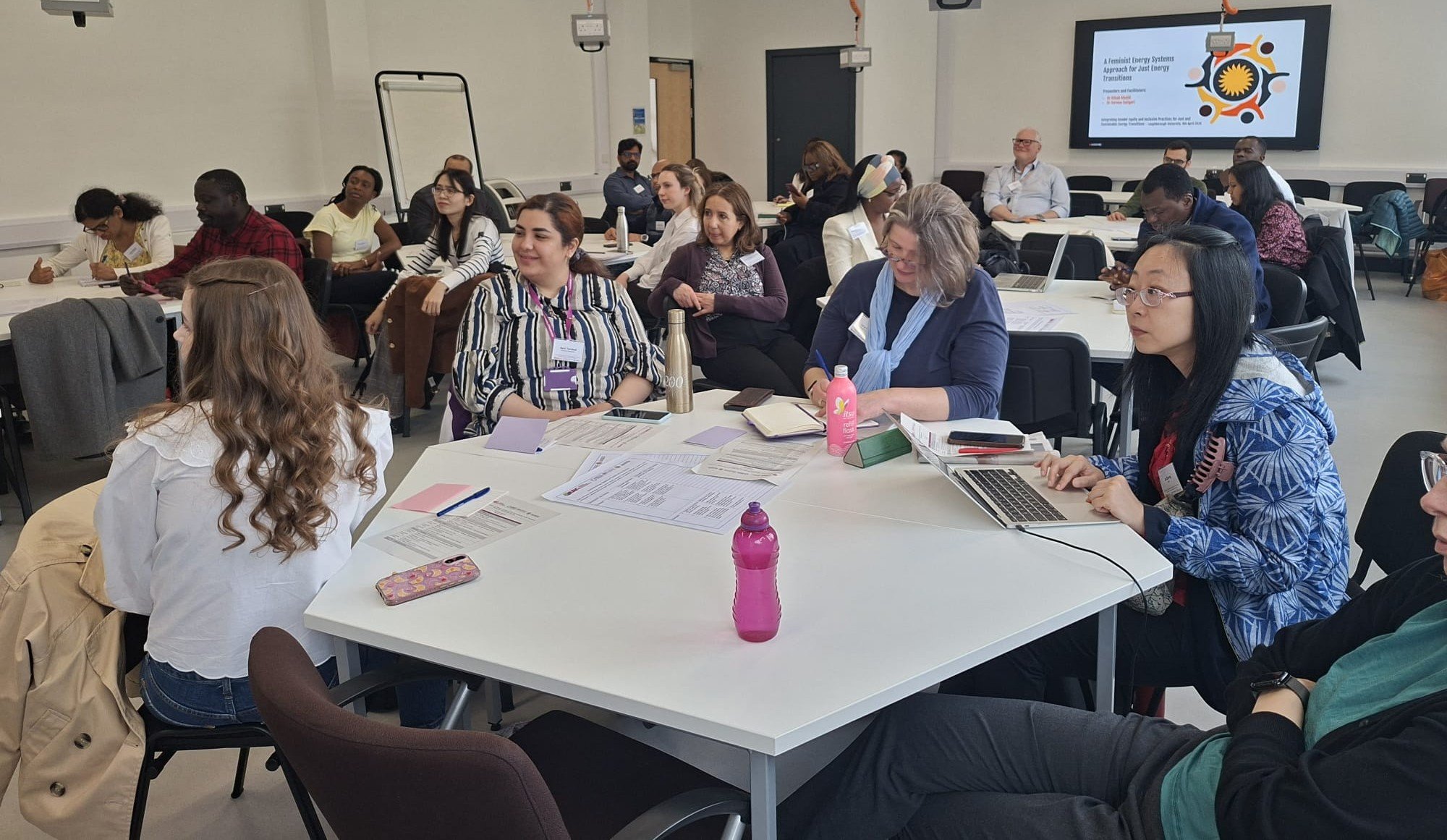
On 9 April 2026, we welcomed over 30 participants from across the UK to Loughborough University for a one-day workshop, Integrating Gender Equity and Inclusive Practices for Just and Sustainable Energy Transitions. Supported by the ERA/C-DICE Community Fund and organised with in-kind institutional support from the School of Social Sciences and Humanities at Loughborough, the workshop contributed to ERA’s wider commitment to supporting Early Career Researchers through technical, professional and transferable skills development, and offered a practical, interactive space for them to engage with the challenges of designing equitable, just and inclusive energy transitions. Drawing from the work of MECS and JustGESI programmes at Loughborough University, the day was structured around participatory peer learning, cross-institutional exchange, individual action planning, and the co-development of practical tools that participants could carry back into their own research and professional practice.
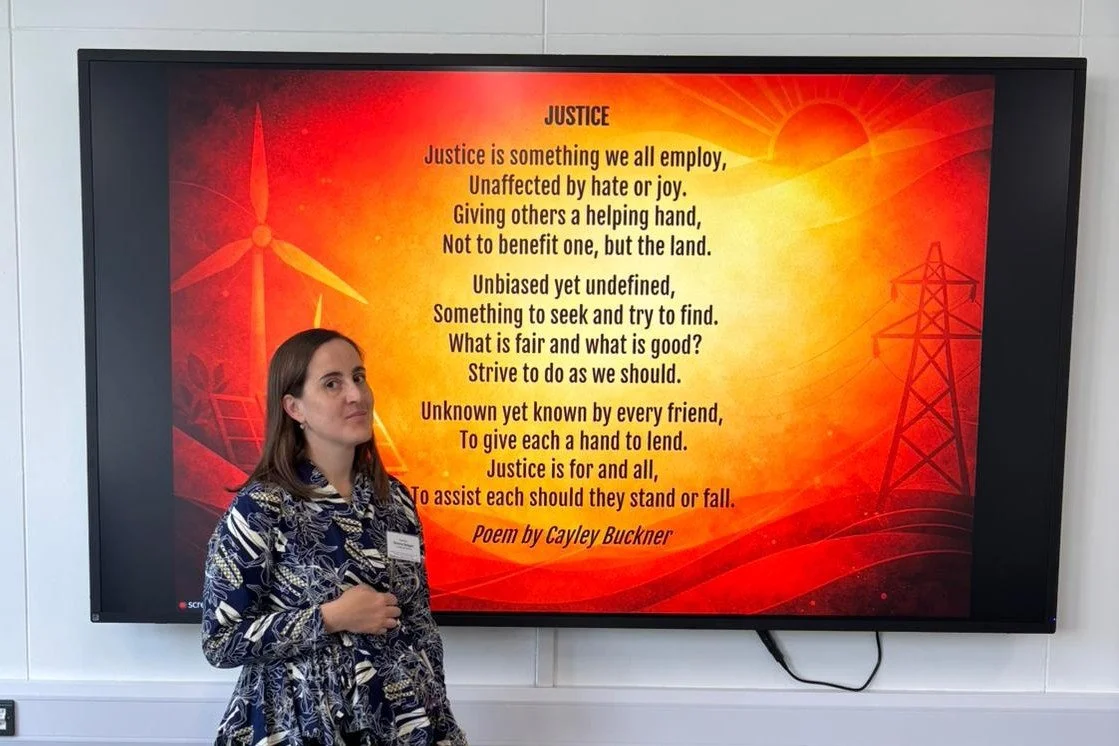
The tone of the day was set beautifully from the outset by Dr Serena Saligari, Research Associate on the JustGESI project, who opened with a beautiful poem on justice, reminding us that justice is not only a technical or institutional concern, but also an ethical and collective practice. C-DICE Director Sharon Henson delivered opening remarks that further reinforced the urgency of the workshop’s themes and the need to create space for critical conversations on justice and inclusion in energy transitions. She also stressed the need to challenge prevailing assumptions within energy transition discourses, so that the voices and experiences of the most vulnerable are properly heard. The opening helped frame the central thread of the day, highlighting that energy transitions are never neutral, and that more equitable futures demand deliberate, reflective, and collective work. Without careful design, transitions risk reproducing inequalities across gender, disability, poverty, displacement, age, and geography.
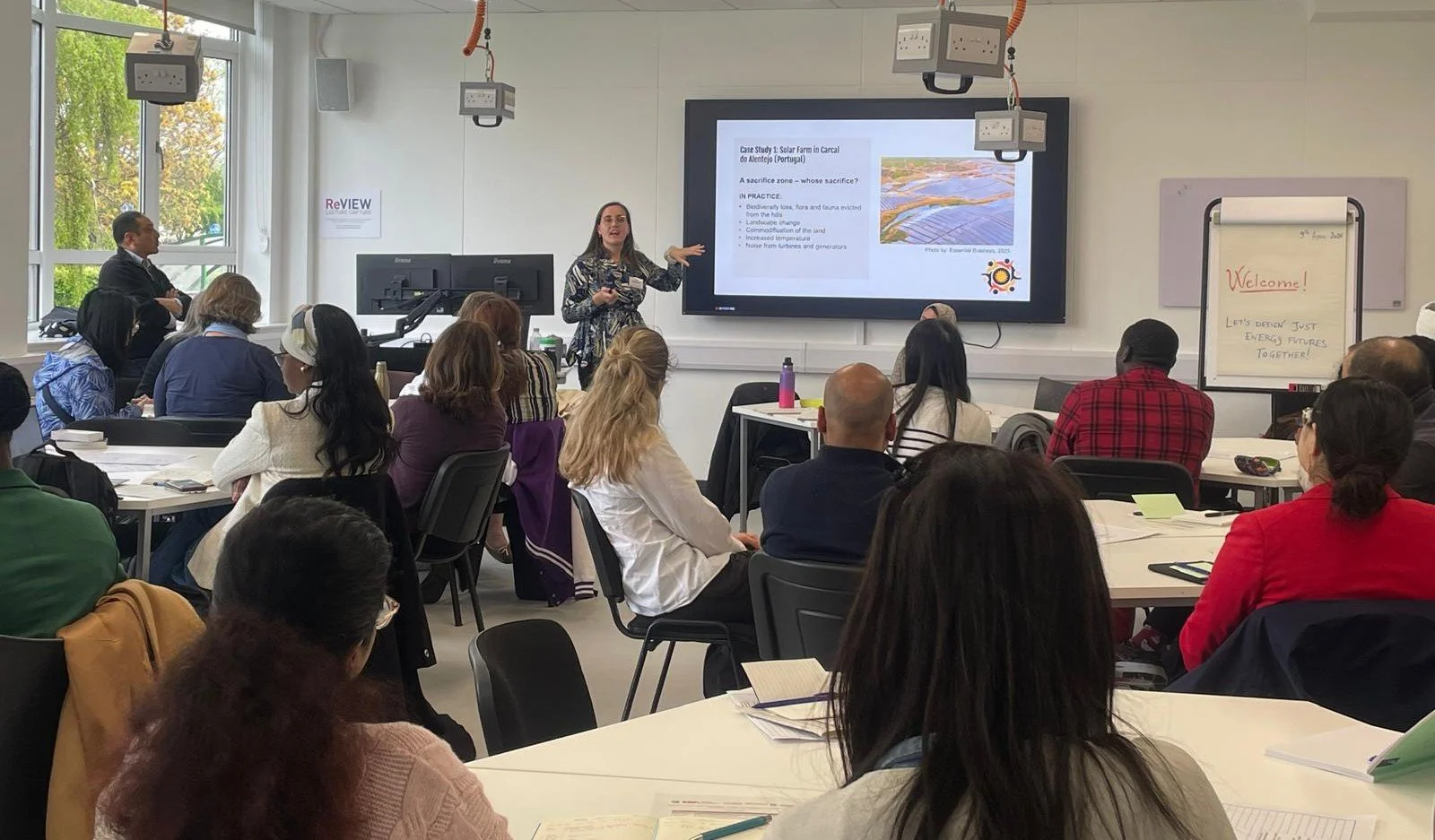
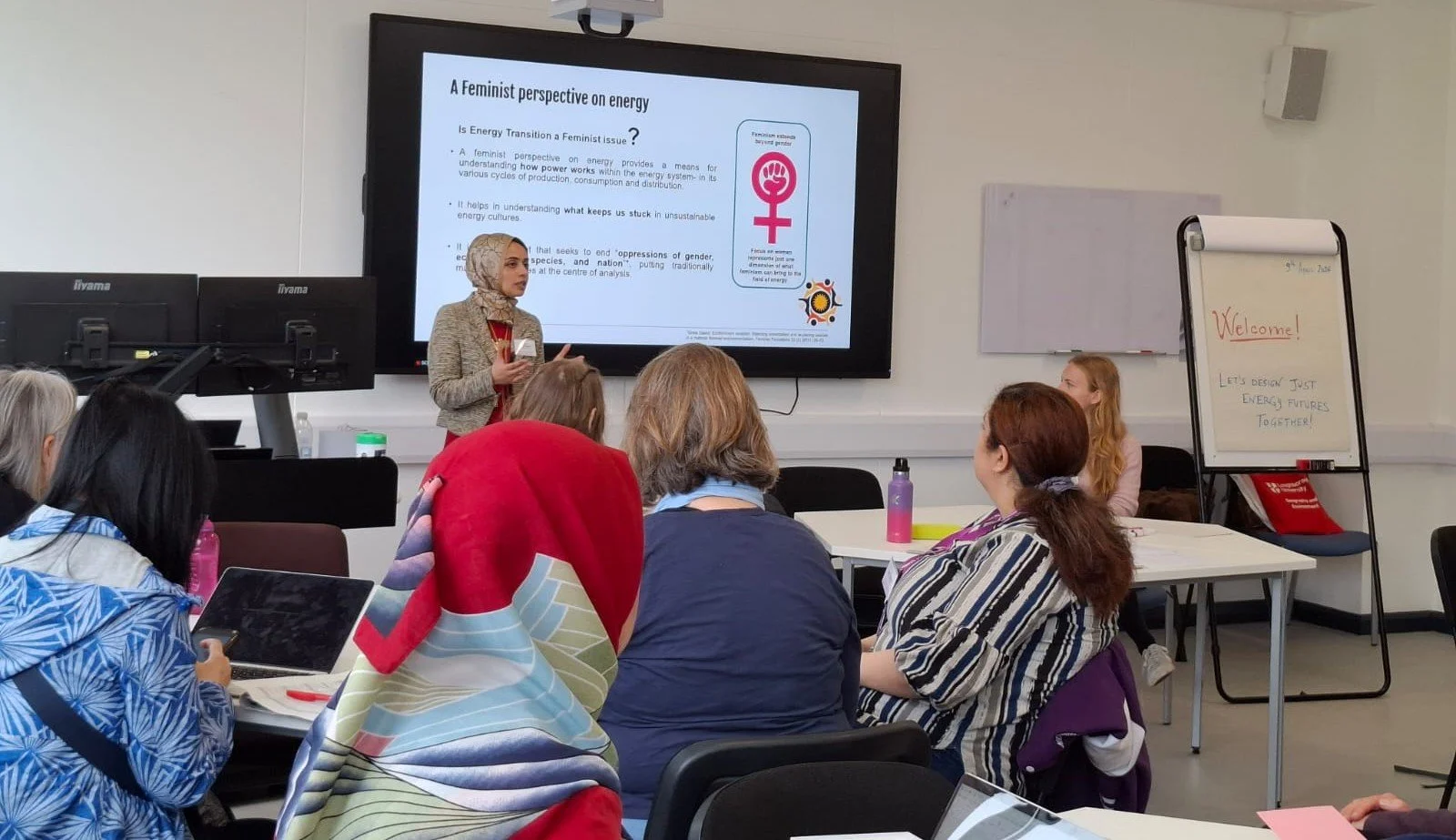
The workshop then unfolded across three connected sessions. Session 1, led by Dr Rihab Khalid – Senior Research Associate on MECS and JustGESI, introduced a feminist energy systems approach to just transitions, asking participants to think beyond narrow technological framings and to engage instead with the political, economic and socio-ecological dimensions of energy systems. Drawing on the feminist energy systems approach proposed by Bell and colleagues (2020), the session challenged the idea that “adding women and solar panels” is enough, and instead made the case for a whole-systems approach that asks who makes decisions, who benefits, who bears costs, and who continues to be overlooked in prevailing transition pathways. Case studies presented by Dr Serena Saligari grounded the broader dimensions of energy justice in concrete, real-world contexts.
The discussions that followed were rich, searching, and highly engaged. Participants reflected on tensions between centralised governance and decentralisation, grid and off-grid pathways, tenancy and home ownership, regional disparities including sacrifice zones, advantages of solar as well as its dark side, and the extent to which users’ agency is always shaped by wider inequalities of geography, time, funding, technical ability and ecological constraint. They also grappled with the challenge of measuring justice itself: how do we move beyond narrow metrics, and how do we account for the difference between nominal access and the actual ability to access, use, maintain, and benefit from energy systems over time? These were not easy conversations, but that was precisely the point, as the workshop created space for complexity in everyday lived experiences.
That same spirit carried into Session 2, led by Dr Samir Thapa, Senior Research Associate at MECS, which focused on finance, digital inclusion and place-based methodologies in clean cooking transitions. The session borrowed from the theoretical framework of Session 1 and pushed participants to ask justice-centred questions about how exclusion can be produced through payment structures, eligibility rules, digital systems, and risk allocation. It highlighted how financial inclusion is more than access alone, and that it also concerns affordability, usability, trust, protection, control, and agency.
The session generated particularly sharp and grounded discussion. Participants raised important questions about disability-inclusive design and accessibility for differently abled users, and what kinds of co-design processes are needed to ensure technologies work across different contexts and capabilities. Others pressed hard on affordability and the challenges of meaningfully integrating justice and inclusion when modern systems remain financially out of reach for many. The roundtable activity and group work drew out practical and critical responses on infrastructure finance, on-bill financing, PAYGO approaches, repair and maintenance, mini-grids, microfinance, unreliable electricity systems, fragile geographies, data governance, and elite capture. It also highlighted how a just transition must often be thought across multiple scales at once, local, regional and national, and cannot be reduced to a single financing instrument or delivery model.
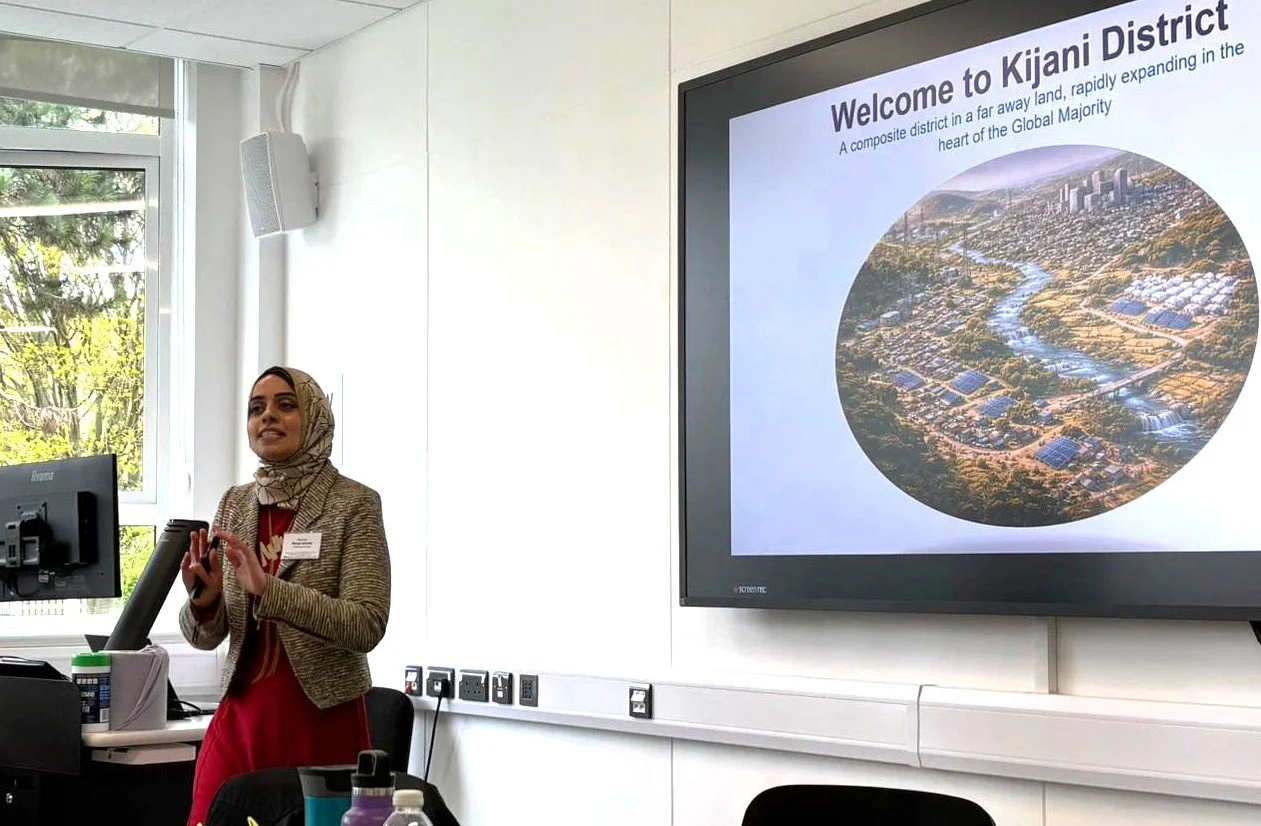
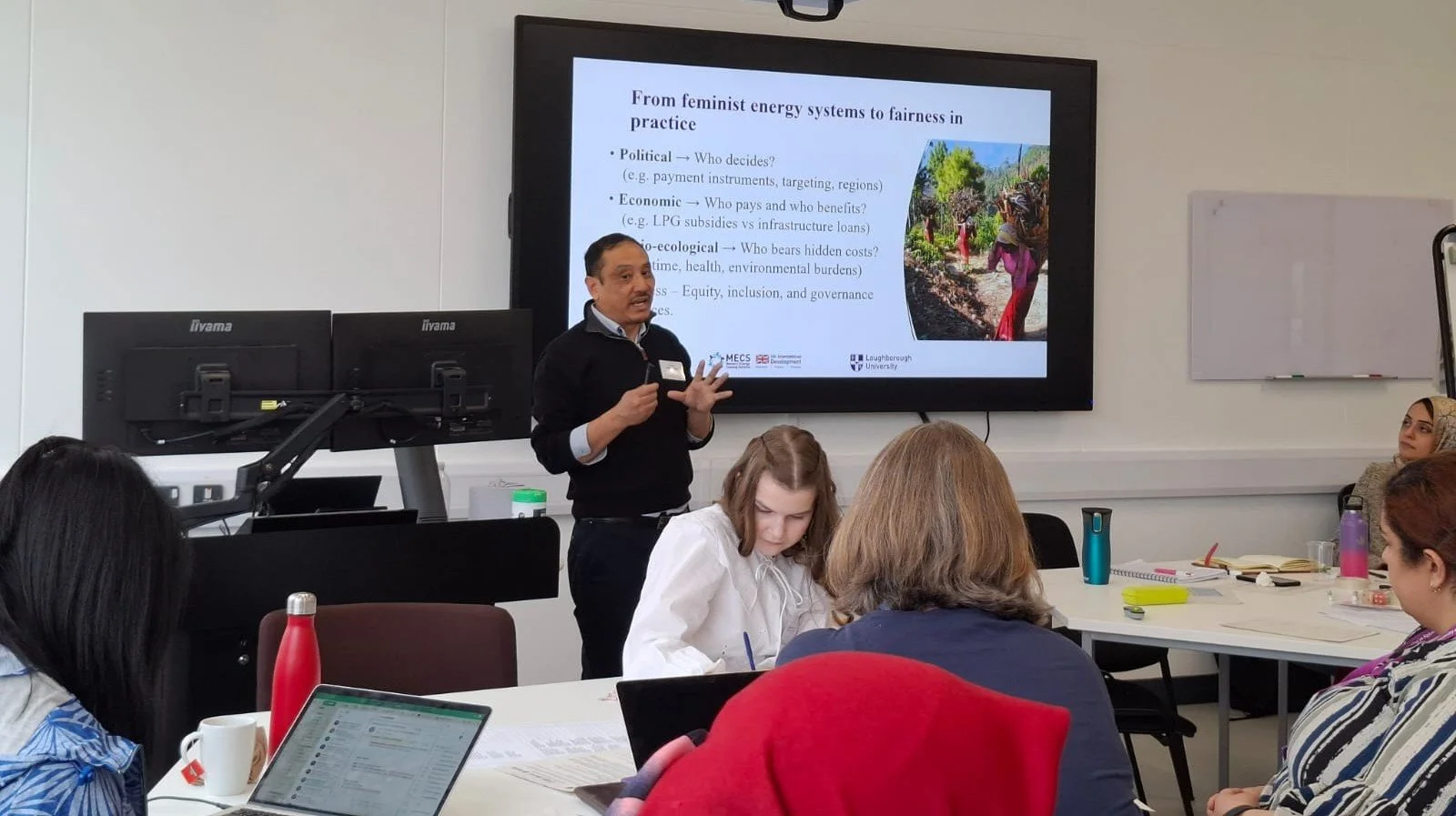
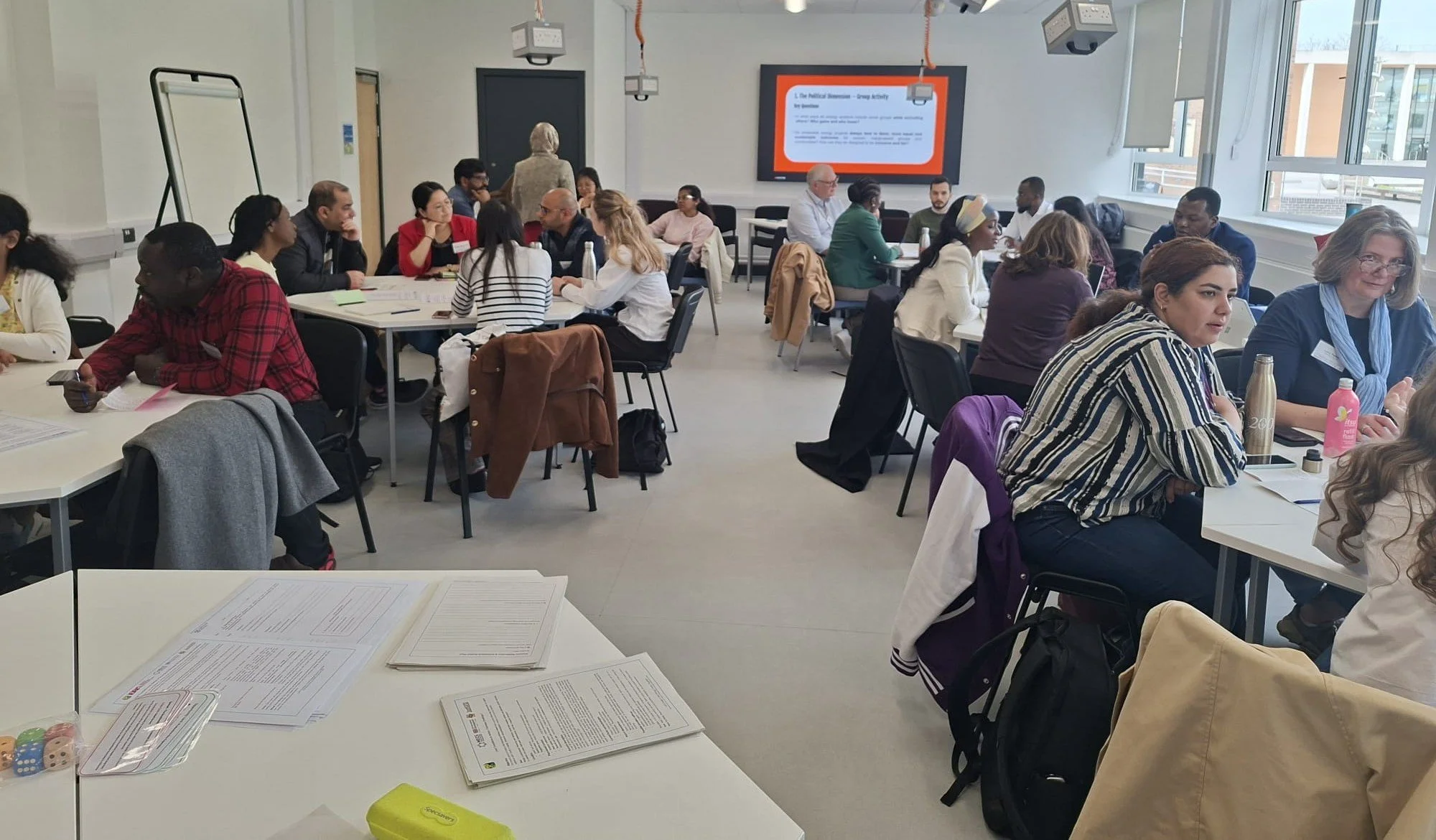
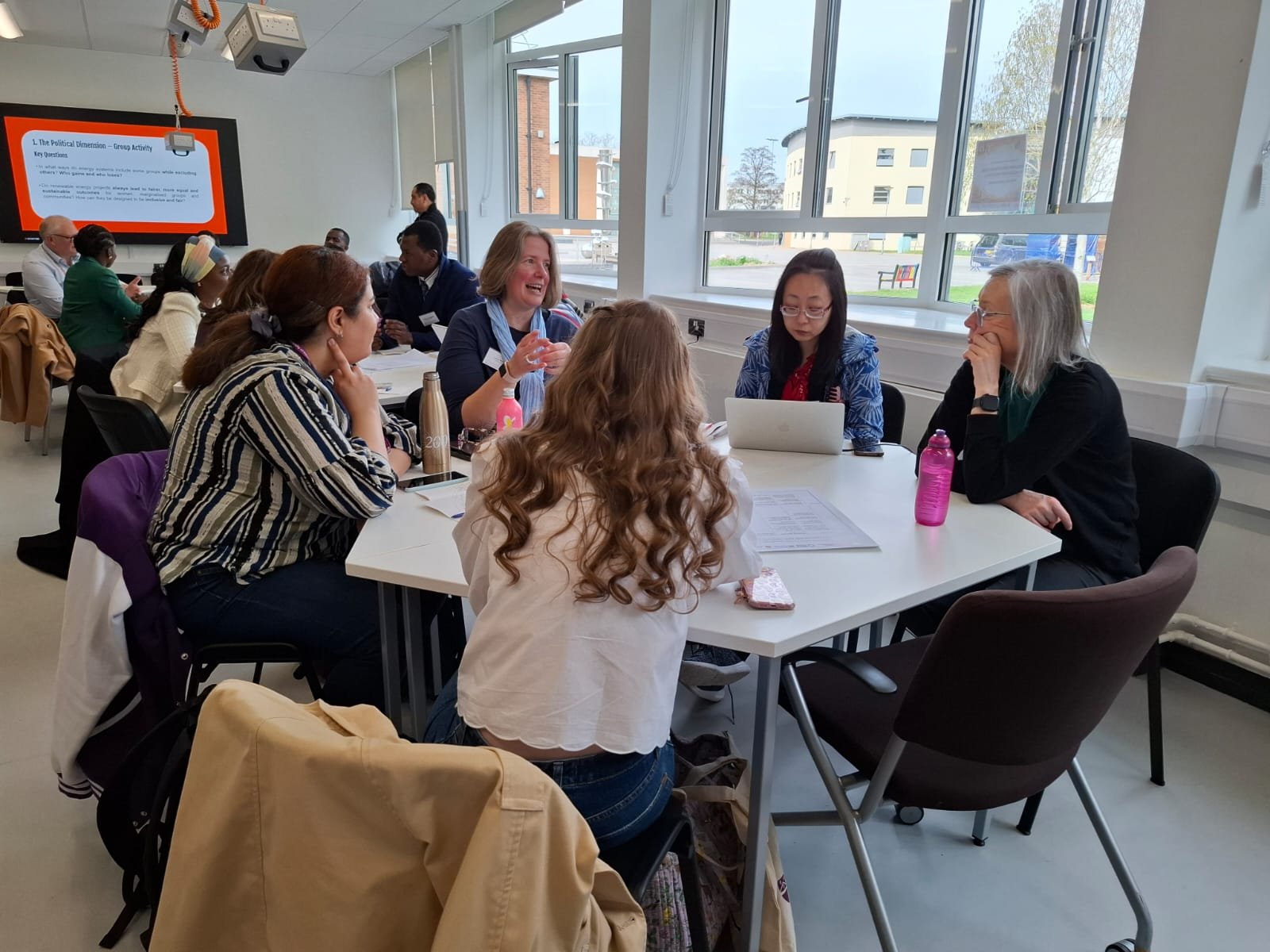
The afternoon Serious Game, Just Transitions in Action: Personas & Pathways for Inclusive Energy Systems,brought a different kind of momentum into the room. Built around a fictional Kijani District somewhere in the heart of the Global South (aka the Global Majority region), the game asked participants to develop citizen personas, identify layered vulnerabilities, and then work within real-world energy scenarios to design more inclusive pathways. The game pushed participants to imagine ideal just systems and then to stress-test them, recognising who holds power, who bears risk, what happens under shock, and what safeguards are needed if inclusion is to endure beyond the design phase.
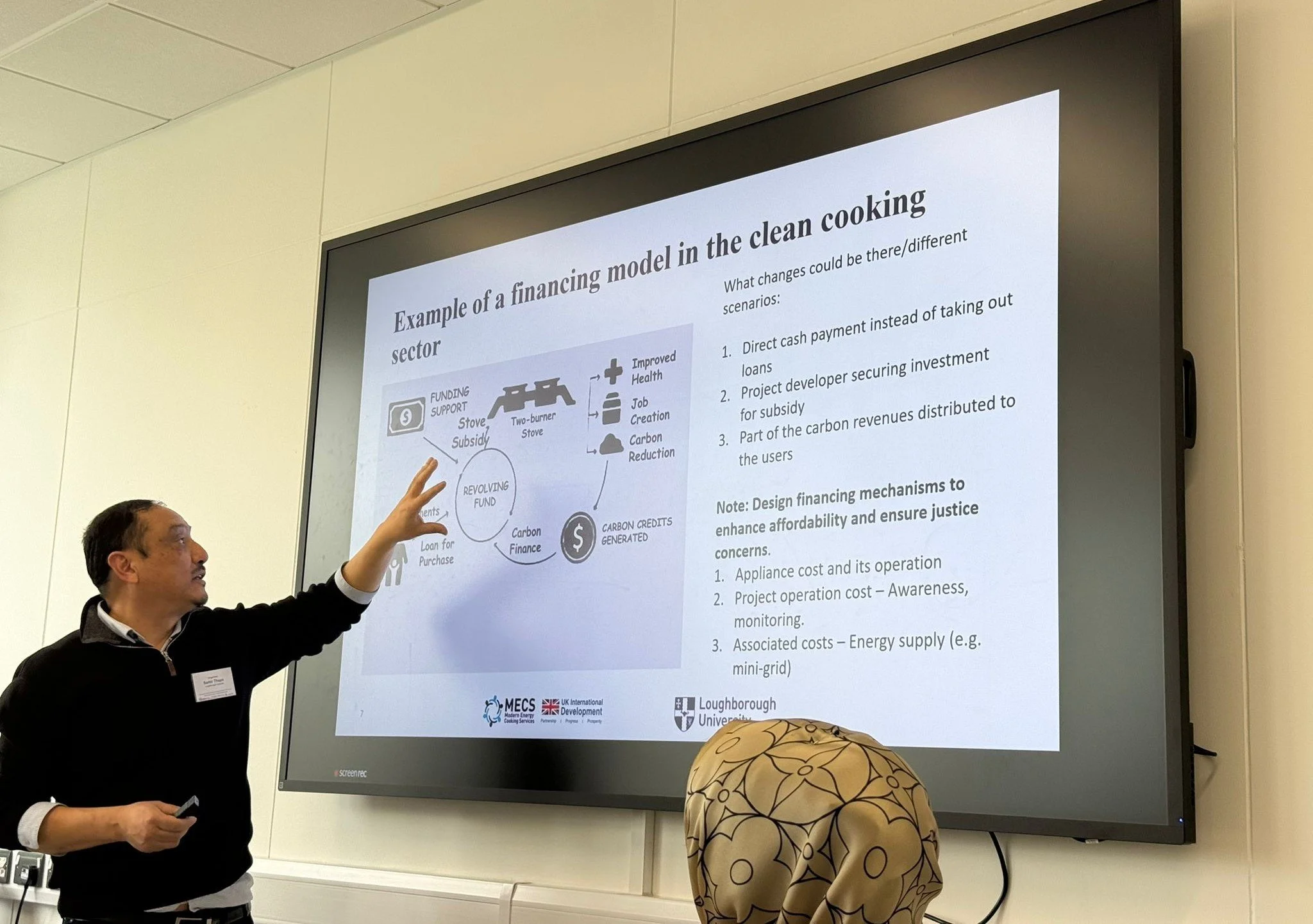
Throughout this session, participants engaged deeply with issues of eligibility, seasonal income, security, identification, displacement, discrimination, gender and disability, exposure to events outside people’s control, and the ways climate and livelihood shocks can indirectly reshape access to energy. They then linked those questions to governance, accountability, co-management, committee representation, local authority involvement, private sector roles, capacity building, and bottom-up design. The participatory format here was especially useful as it gave participants time to think, to challenge each other, to bring in examples from their own work, and to move from abstract commitments to more grounded action.
This depth of engagement also came through strongly in the participant feedback, in which responses were overwhelmingly positive. Participants found the workshop extremely useful, with many highlighting its interactive and genuinely participatory character. One participant described the day as “Very well-structured, very interactive, great diversity of participants, thought provoking discussions- an excellent day!”. Another noted that“The mix of presentations, breakout sessions, the Serious Game and feedback was very engaging,”adding that the opportunity to complete the action plans was especially valuable.
Participants also repeatedly returned to the value of the workshop’s interdisciplinary and integrated framing:
“Really interesting and thought-provoking workshop which covered many important aspects of the energy system and how it could and should be made more inclusive! It was especially great to hear from different speakers about their own areas of research expertise and to connect with other researchers from across the country. The interdisciplinary focus will be really helpful in my own research going forwards.”
Several reflections showed just how strongly the workshop’s justice-oriented message had landed. Chikerenma Susan Torti from the University of Wolverhampton noted that, “one key takeaway is that a just and sustainable energy transition must go beyond technical solutions and actively address issues of inequality, power, and inclusion.”, whileKawuribi Zakaria from the University of Nottingham underscored how “equity and Social Inclusion should be a priority for everyone whenever we are considering transformations or policies in the energy sector.”
Others pointed to more specific conceptual shifts in their learning. Daminabo Pokubo from Nottingham Trent University observed that “Feminism isn’t about women or gender alone,” while Laura Anne Carr from National Energy Action / Newcastle University reflected that “Renewable energy isn’t always equitable,” a reminder that interventions which may appear progressive on paper can still exclude renters and other groups whose needs are too often overlooked. It was especially encouraging to read how many participants identified new insights, previously underexplored questions, and aspects of systems thinking that they now want to take further in their own work. These included the importance of “holistic” and “full cycle” perspectives; the need to keep asking difficult questions about “who benefits” from transition pathways; greater attention to “disability and accessibility in energy research”; stronger recognition of the “links between financial and digital inclusion”; and a more explicit focus on “care and community work” within energy systems. Some participants captured both the scale of the challenge and the sense of possibility that ran through the day: “True inclusion of all in the energy transition is a huge challenge that requires us to consider the technical, political, financial and social challenges. This takes time and requires extensive consultation, which can stand at odds with project timescales and global goals. However, it presents a great opportunity and people can be convinced!”
Overall, the feedback suggested that participants valued not only the structure and energy of the workshop, but also the way it created space to think more critically about justice, lived realities, and the kinds of questions that must sit at the centre of energy transition research and practice. Several also offered thoughtful suggestions for improvement, including more time for discussion, more Global North comparison, stronger North–South and decolonial framing, and more involvement from policy actors. For us, this was a very encouraging sign, as participants were not only engaged but invested enough to want the conversation to go further.
In his closing remarks and feedback, Neil Radford, ERA Skills Manager, reflected on the workshop as a thoughtful and thought-provoking event that challenged participants, sensitively and constructively, to think about energy transitions through new lenses. He also underscored an important message that resonated strongly with the discussions across the day: that we must avoid assuming generic energy transition solutions work in every context, and instead work alongside local communities to understand their needs and the consequences of transition. He congratulated the organisers on delivering what he described as a “phenomenal and genuinely impactful event.” For us, that was a particularly affirming way to close the workshop, and a welcome reminder that careful, reflective and participatory spaces like this do matter.
As organisers of the workshop, one of the clearest takeaways from the day was that there is a strong appetite for more integrated and participatory spaces within energy research. While the emphasis on justice and inclusion was clearly important, participants responded most strongly to the way the workshop brought together feminist analysis, finance, digital inclusion, place-based thinking and applied design into one shared conversation. The day also reaffirmed that, when given the time and space to do so, participants are willing to engage deeply with complexity, and that some of the most meaningful conversations emerge when difficult questions are worked through collectively.
Photo credit, all images: MECS team.
AI was used in the drafting of this blog post for language editing, improving clarity, and refining sentence structure. The content, reflections, interpretation, and selection of examples and quotations were led by the authors.
