
Valuing Local Knowledge in Energy Transitions: Reflections from the Energy Ethics Conference
Dr Serena Saligari, Research Associate on the JustGESI project at Loughborough University, reflects on her experience at the Energy Ethics Conference at the University of St Andrews.
Between 3rd-6th August 2026, I attended the conference ‘Infrastructures of Energy’, organised by the Center for Energy Ethics at the University of St Andrews, Scotland. The Centre for Energy Ethics, established in 2016, is an interdisciplinary centre that brings together researchers, practitioners, industry representatives and communities to collectively address some of the most pressing societal questions about how to create a better energy future for all. Marking ten years since its foundation, the conference provided an opportunity to celebrate the Centre's achievements while engaging in timely conversations about the future of energy.
The conference gathered academics and practitioners from around the world to discuss a wide range of energy-related issues. Sessions explored a broad range of topics, including extractivism and resource governance, energy systems and infrastructures, climate justice, energy poverty, transitions to low-carbon futures, community-led energy initiatives and the social and ethical dimensions of energy production and consumption. Across the programme, participants reflected on how energy infrastructures shape everyday life and how more just and inclusive energy futures might be realised.
Whose expertise counts in energy transitions?
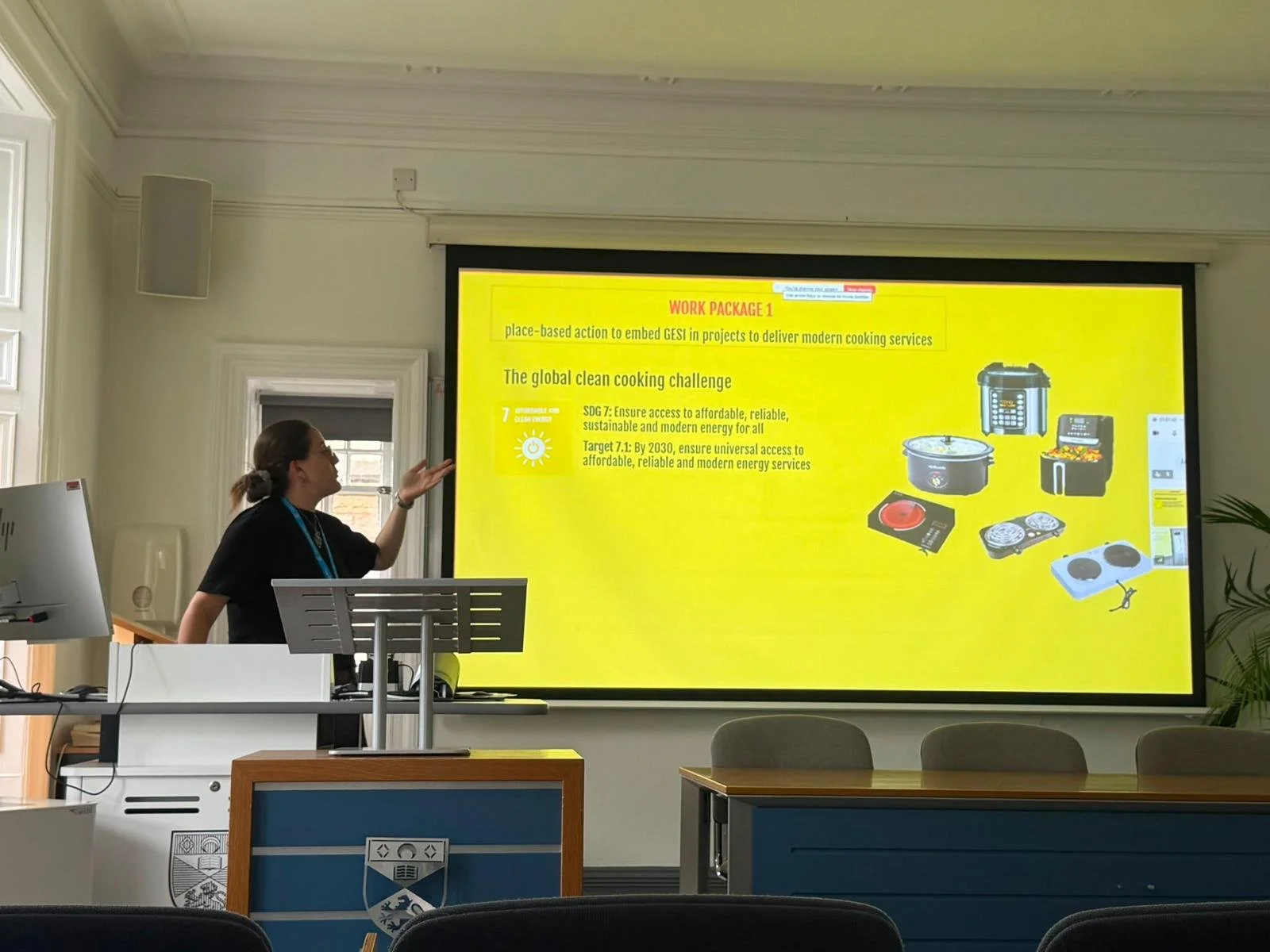
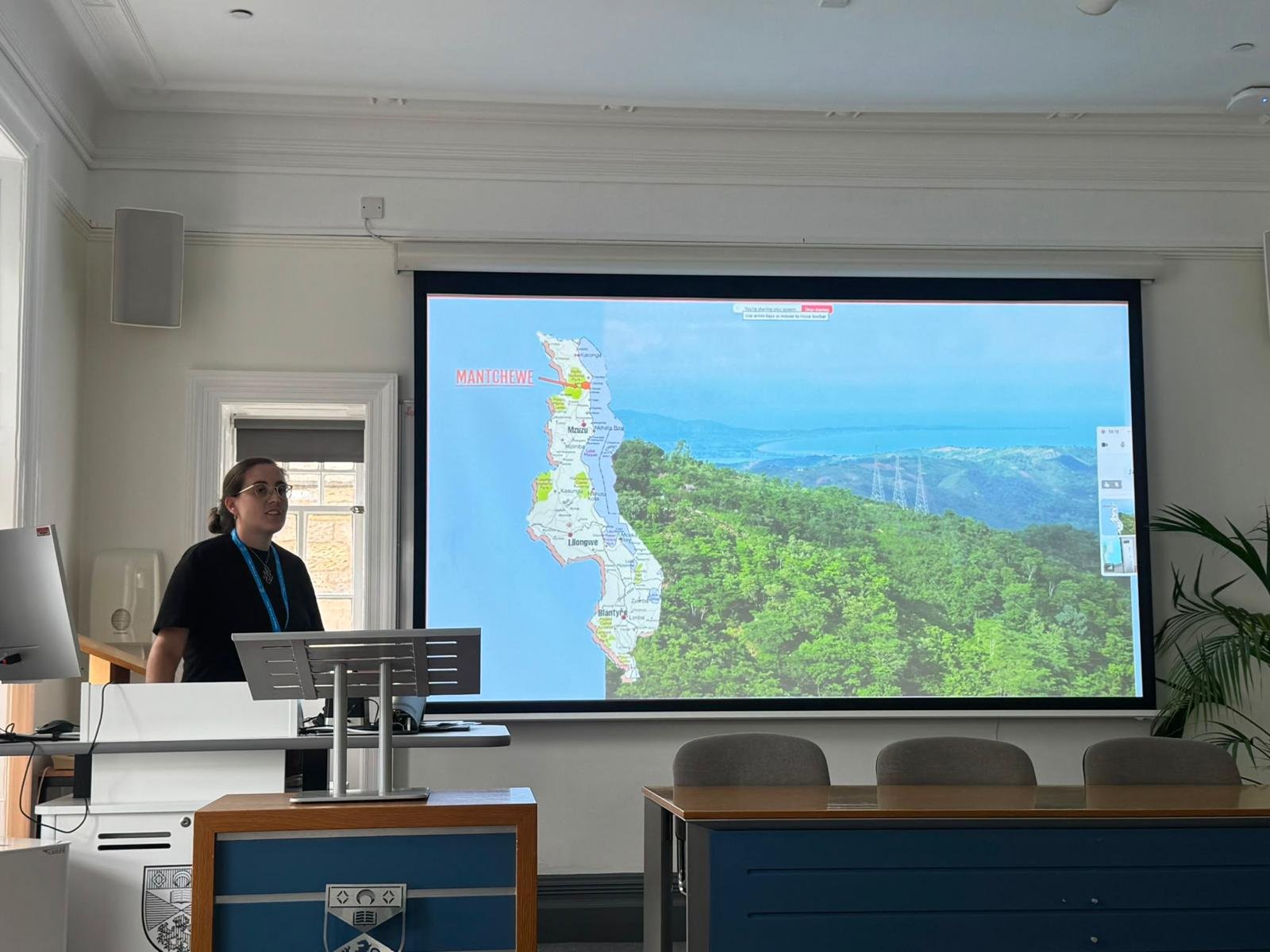
Dr Serena Saligari presenting her work at the Energy Ethics Conference at the University of St Andrews. All photos courtesy of the author.
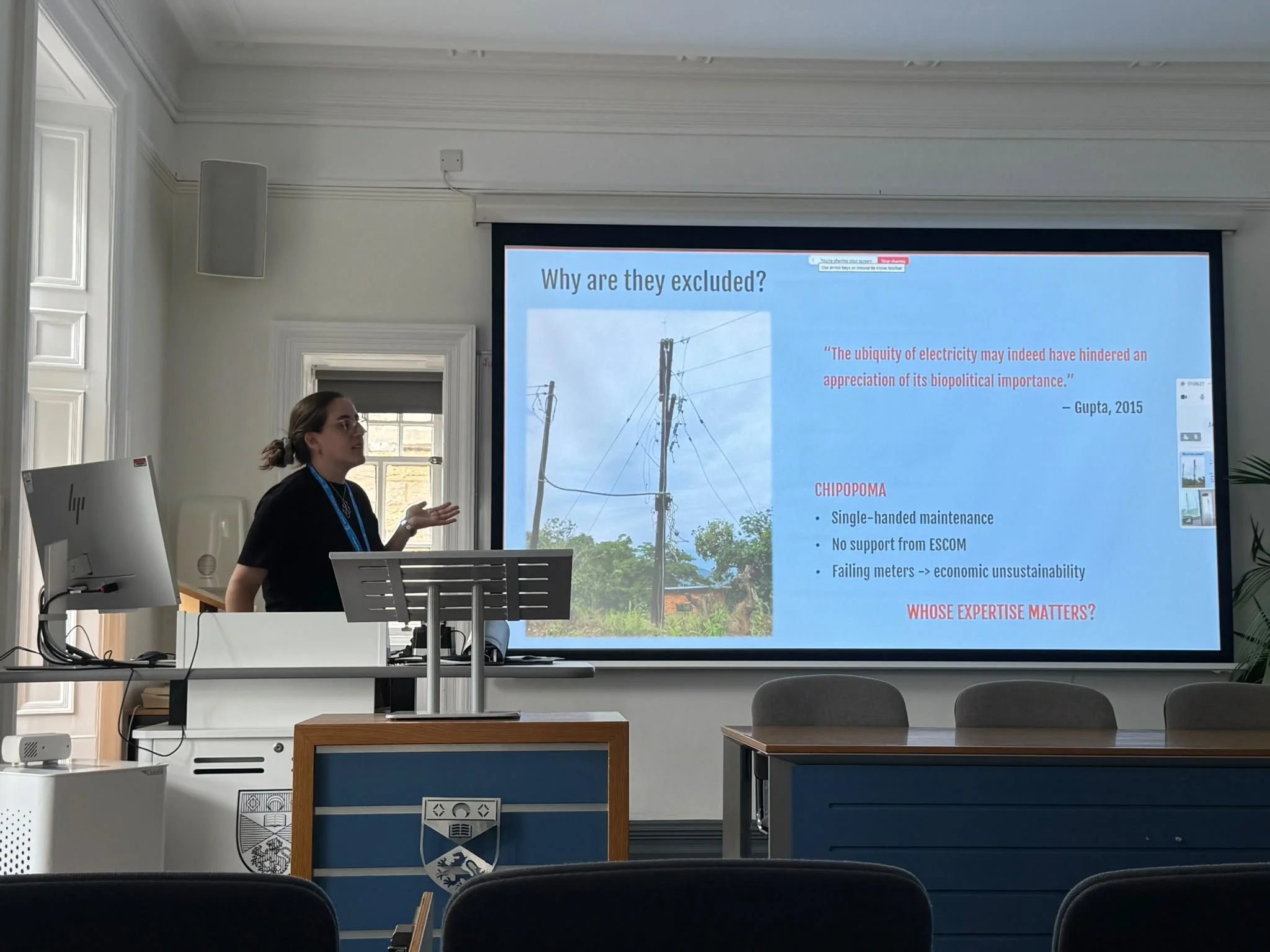
My paper, titled ‘Ethics, Epistemics, and Everyday Infrastructures: Investigating Gender Equity and Social Inclusion in E-cooking Transitions in the Global South’, was part of a panel on ‘Expertise’.
Drawing on the work we are undertaking at JustGESI, I reflected on a critical question: whose expertise counts in energy transitions, and what forms of knowledge continue to be marginalised in decision-making processes, particularly in the Global South?
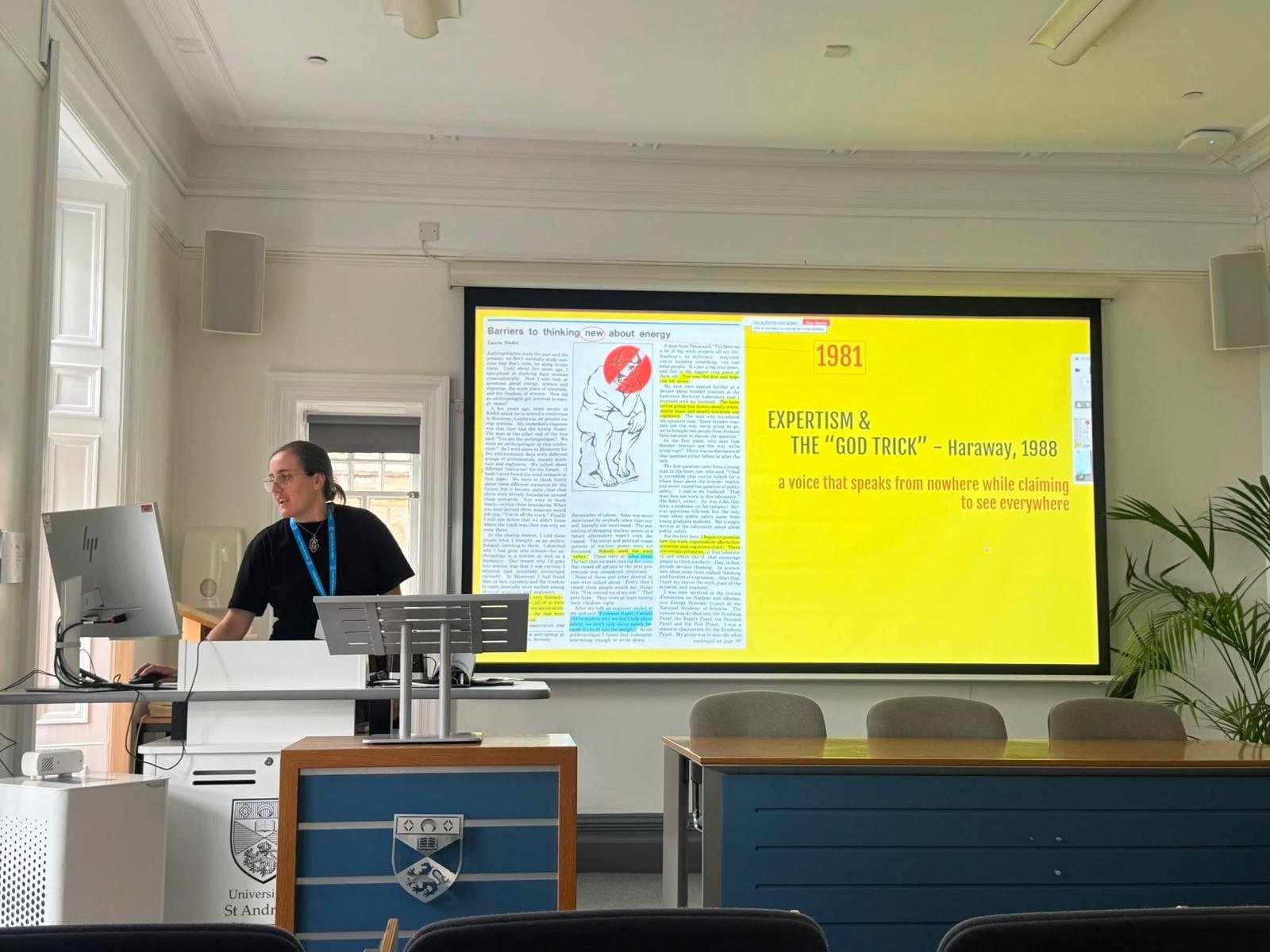
The presentation drew on critiques of expertism, including Donna Haraway's ‘god trick’ and Laura Nader's reflections on barriers to thinking new about energy, to question the dominance of technical and institutional expertise in shaping energy transitions. It argued that while certain forms of knowledge are often treated as authoritative, the lived experiences and situated knowledge of local communities, women and marginalised groups are frequently overlooked, and this risks reproducing existing inequalities in energy decision-making.
JustGESI’s work is concerned with understanding and addressing the root causes of discrimination that continue to exclude women and other marginalised groups from participating fully in energy transition processes. Work Package 1, led by Loughborough University, aims to design and develop place-based electric cooking initiatives in Malawi, Mozambique, Ethiopia and Tanzania that build upon the skills, knowledge and lived experiences of local communities. In doing so, the project seeks to ensure that energy transitions are shaped not only by technical expertise, but also by the ideas, resources, priorities and experiences of those most affected by them.
A central argument of the paper was that energy transitions can only be truly just if they acknowledge and value the knowledge that already exists within communities. People living with energy constraints develop situated strategies, skills and practices to navigate everyday challenges. Recognising these forms of knowledge is essential to achieving recognitional justice, one of the three tenets of the energy justice framework, which refers to the fair recognition, respect and valuing of different identities, experiences and ways of life.
However, recognitional justice cannot be achieved without epistemic justice. Following philosopher Miranda Fricker, epistemic justice is understood as the fair treatment of people as knowers and the recognition that their knowledge, experiences and perspectives are valid and worthy of consideration. Too often, energy transitions prioritise technical or external expertise while overlooking local ways of knowing, limiting energy users’ ability to shape their own energy futures.
Engaging discussions and JustGESI in practice
The presentation sparked an engaging discussion. Participants raised important questions about how Gender Equality and Social Inclusion (GESI) policies are developed within the countries where JustGESI operates. Others wondered whether epistemic justice might be an ambitious goal in contexts where people face immediate challenges in meeting their basic needs and may have limited opportunities to participate in planning or decision-making processes around energy transitions.
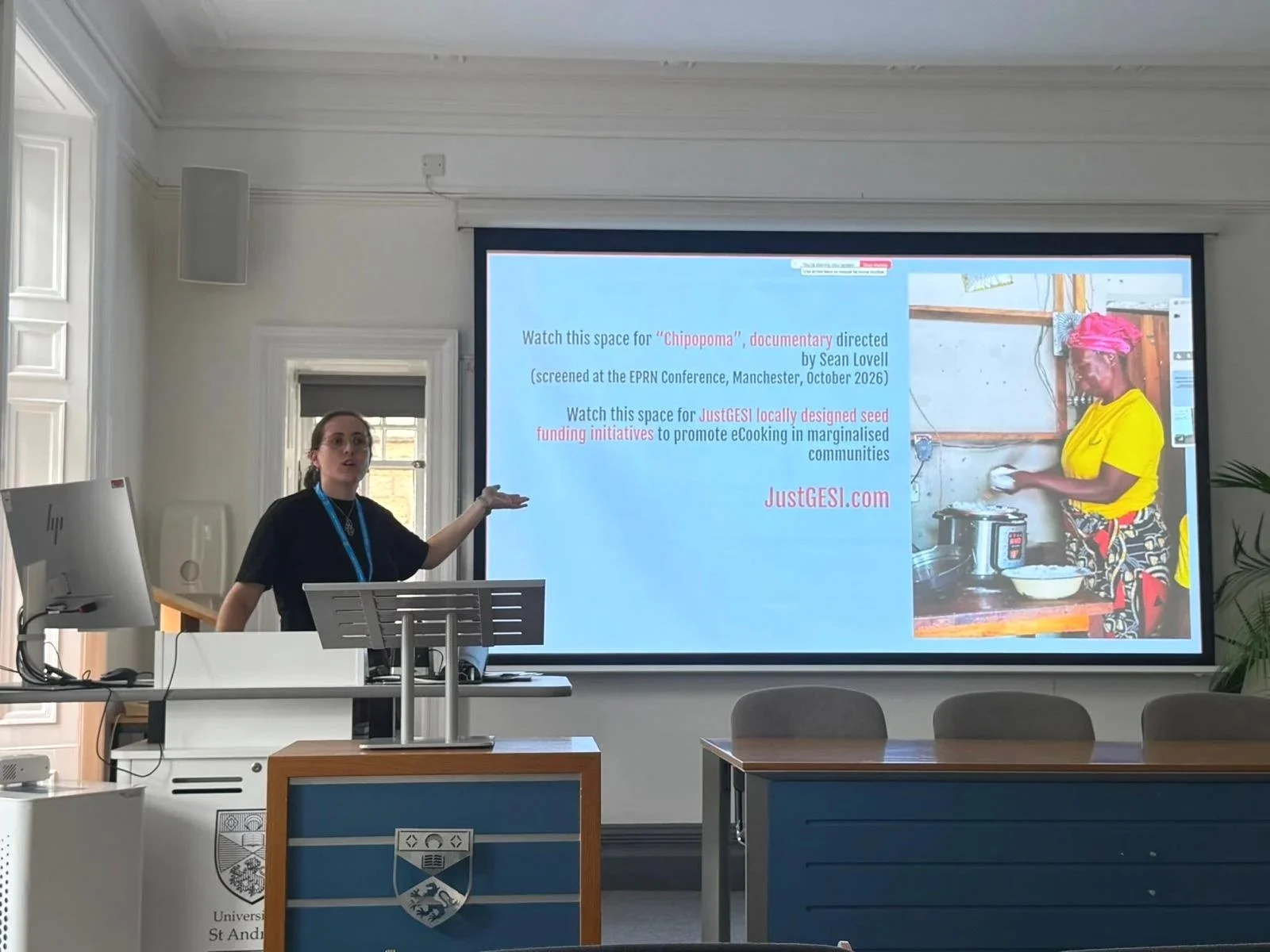
While there are no easy answers to these questions, they reinforced the importance of the work being undertaken through JustGESI. I encouraged participants to keep an eye on our website, where we hope to share evidence and lessons emerging from the project over the coming years. At the moment, our teams in Malawi, Mozambique, Tanzania and Ethiopia are using the Energy Delivery Models methodology to work closely with local communities and co-design electric cooking initiatives that respond to the needs and aspirations of women and marginalised groups. In Tanzania, for example, the team is developing an electric cooking initiative targeting people with disabilities, while in Malawi the team is exploring opportunities to promote electric cooking on a remote island community where electricity is supplied through a solar mini-grid.
Learning from local innovators
One of the highlights of the conference was the screening of films produced by our colleague and filmmaker Sean Lovell as part of the CESET project, which preceded JustGESI. Among these was the documentary Chipopoma, which tells the story of a community energy project in northern Malawi, where a local man, John, developed a hydropower project to generate electricity for his village
The story of John resonated strongly with many of the themes discussed during both the conference and my presentation. His experience demonstrates that valuable expertise and innovation are not confined to universities, government institutions or industry. Rather, they are often embedded within local communities, where people draw on deep knowledge of their environments and social realities to address pressing challenges.
By referencing John's story in my presentation and through the documentary itself, I hoped to highlight the importance of recognising and valuing local knowledge within energy planning and decision-making. If energy transitions are to be genuinely just, they must move beyond simply delivering technologies and instead create space for local expertise to shape the design, implementation and governance of energy systems.
The conference provided an inspiring reminder that achieving energy justice is not only about expanding access to energy. It is also about recognising whose voices matter, whose knowledge is valued and who gets to participate in shaping our collective energy futures. These questions remain at the heart of the work we are undertaking through JustGESI, and I look forward to continuing these conversations as the project develops.
