From Needs Assessment to Delivery Design: Reflections from Work Package 1 Learning Exchange in Tanzania
Written by Dr Rihab Khalid and Dr Serena Saligari
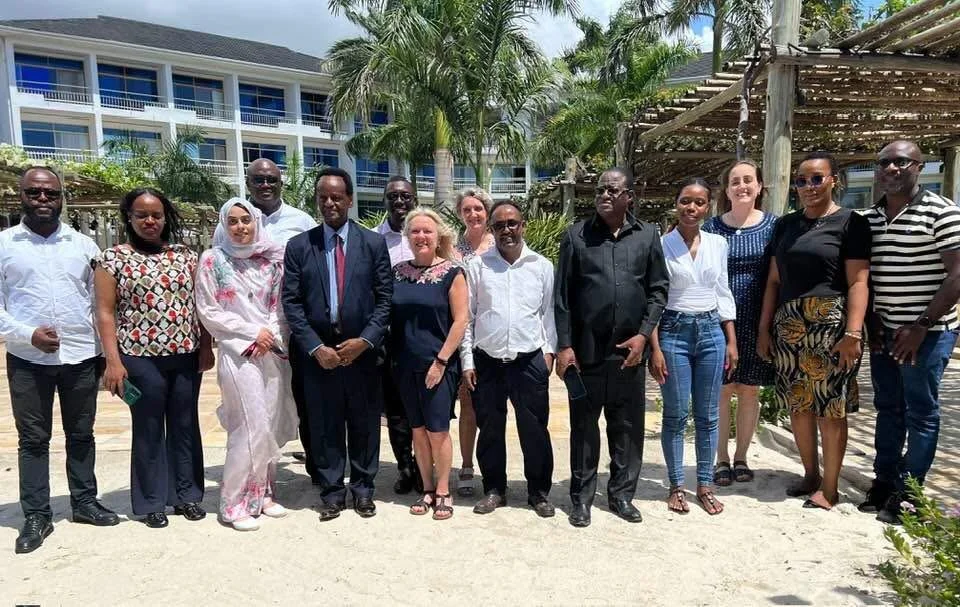
The JustGESI Work Package 1 Learning Exchange in Dar es Salaam, Tanzania, brought together country partners from Ethiopia, Malawi, Mozambique and Tanzania, and the research team from Loughborough University, for four days of intensive reflection on how to design inclusive and sustainable eCooking seed funding initiatives. Partner teams from Work Package 1, in fact, are at the stage of planning the eCooking projects to be implemented in their countries and the workshop served as a platform to generate early learning on inclusive energy delivery models. Being together in Dar had a clear ambition: strengthen the design of the seed-funding projects in a way that prioritises gender equality and social inclusion (GESI) from the outset.
The workshop centred on the Energy Delivery Model (EDM) as the main approach for project design. Led by Dr Sarah Wykes and Emmanuel Cyoy Ngeywo, EDM was presented as an alternative to legacy energy planning, with a stronger emphasis on end-user needs and attention to the wider set of energy and non-energy conditions needed for sustainable and inclusive energy outcomes. This framing was highly relevant to JustGESI, as clean cooking transitions are shaped by intersecting socio-cultural and politico-economic factors. An approach that starts from users and context, and then works outward toward delivery design, offers a stronger foundation for GESI-oriented planning than technology-first models alone.
Day 1 and 2: Establishing the starting point and building understanding through collective analysis
Mr Estomih Sawe, CEO of the Tanzanian project partner organisation and co-host of the workshop TaTEDO-SESO, delivered the opening remarks on Day 1. Building on over 20 years of TaTEDO-SESO experience, he argued that designing practical, effective and sustainable eCooking solutions requires an integrated understanding of people, markets and wider energy systems. Delivery success, Mr Sawe explained, relies on the quality of the model being designed, which needs to take into account finance and supply chains as well as to support women and marginalised groups in shaping clean cooking transitions in practice.
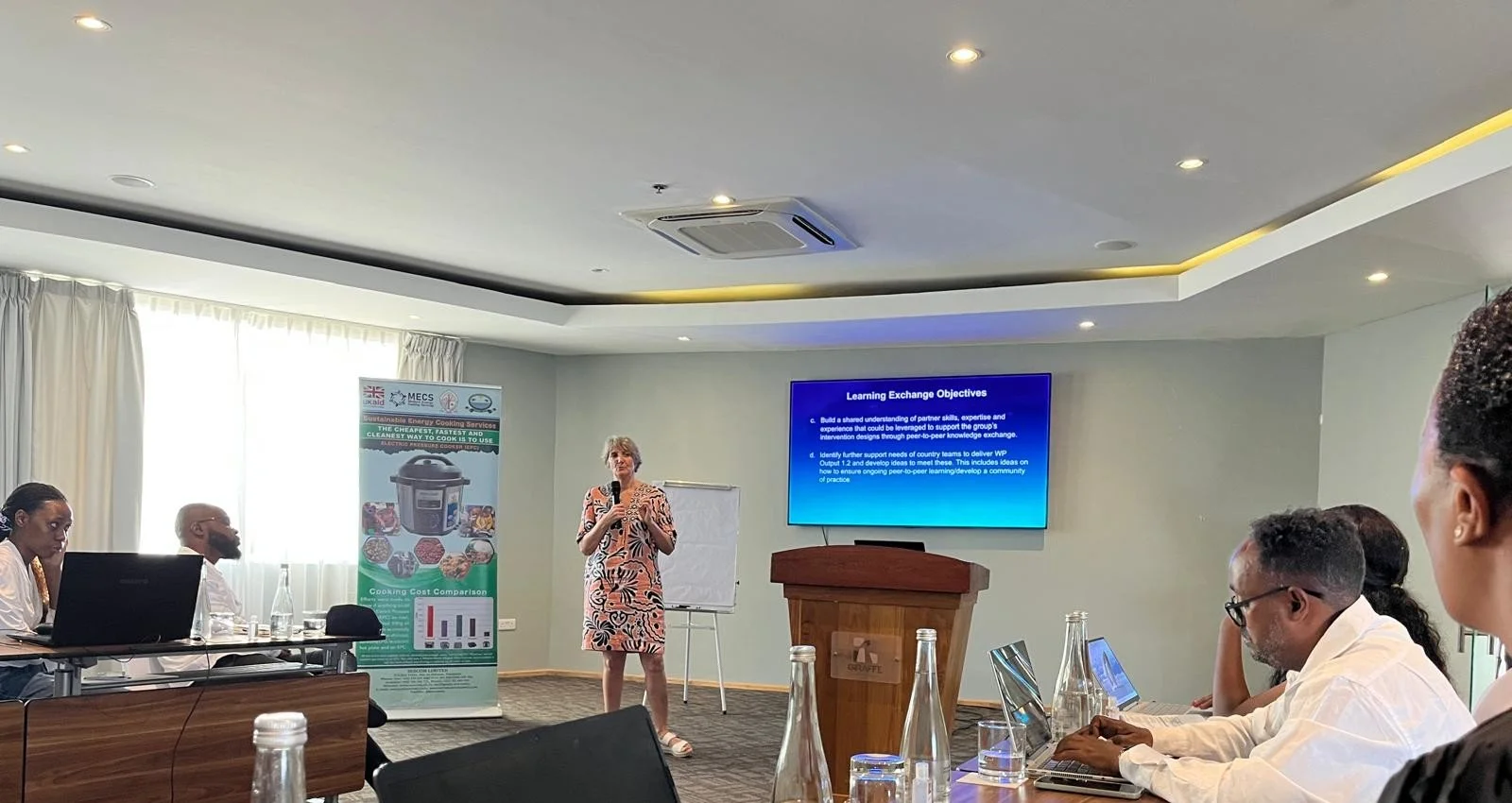
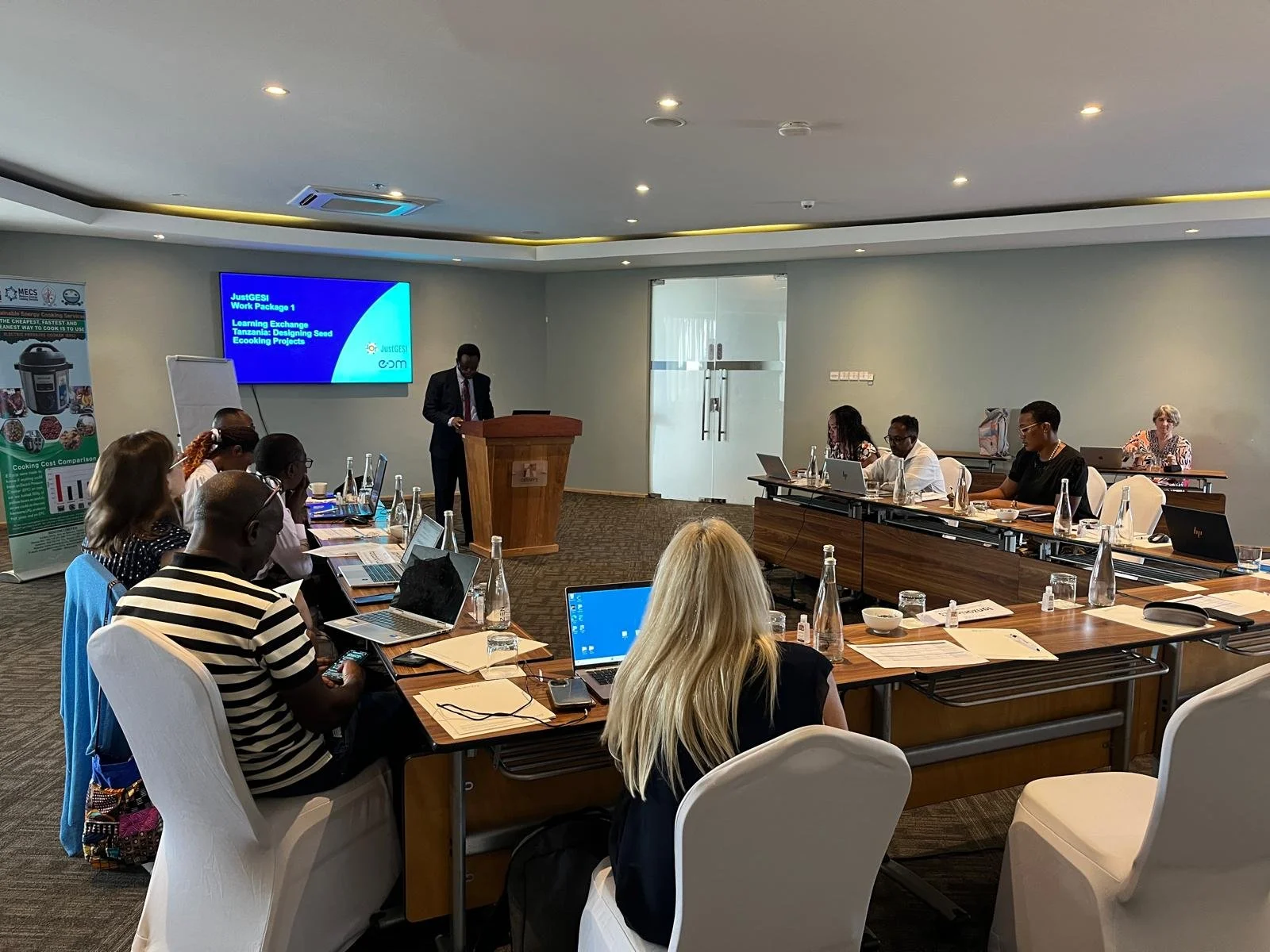
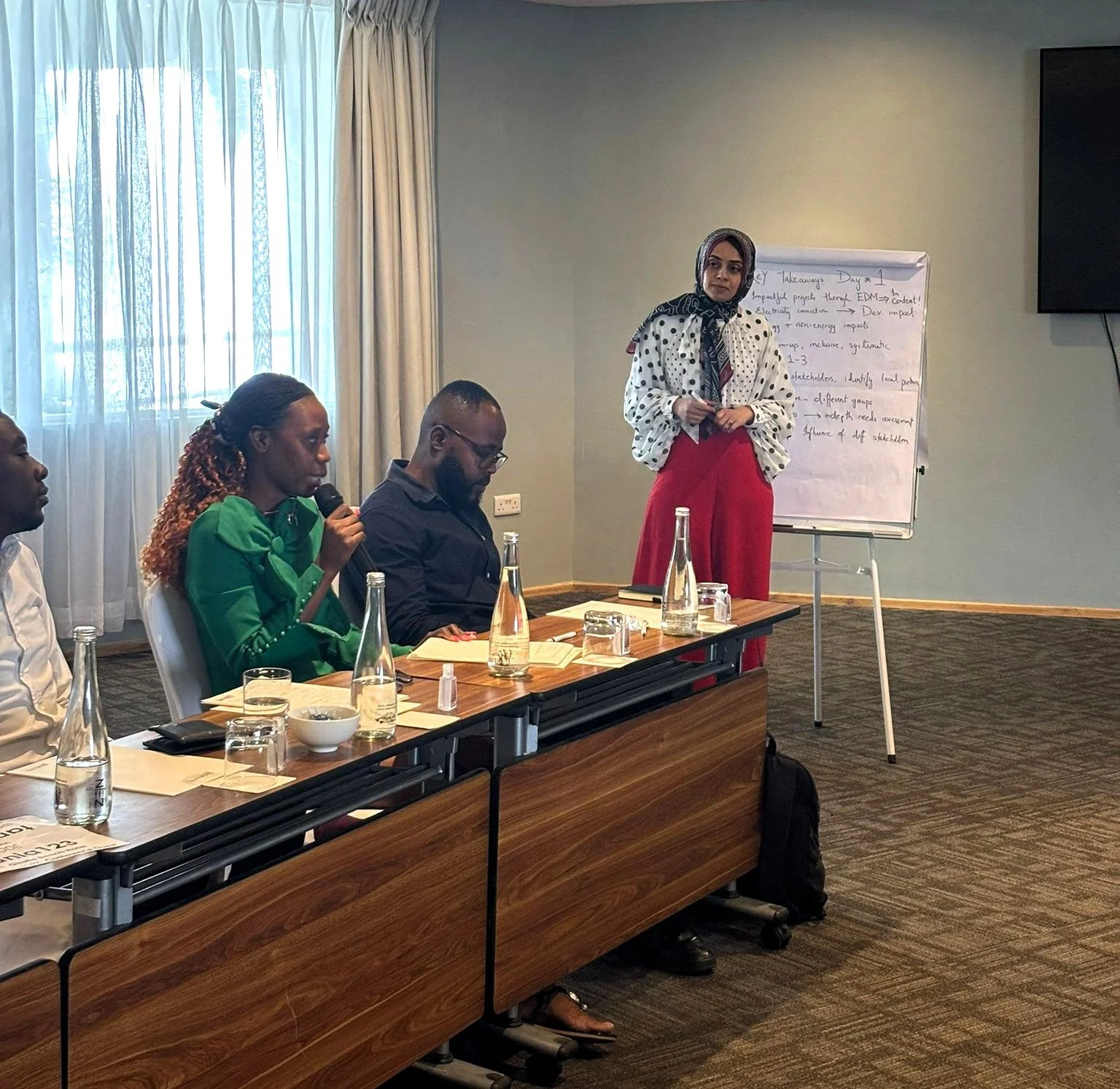
The day then unfolded by focusing on EDM Steps 1 (Identify the starting point) and 2 (Be inclusive). The country teams presented their preliminary working plans for the seed-funding initiatives, which formed the basis for the EDM learning. They then engaged in baselining, identification of data and knowledge gap and prioritisation of end-user needs. Stakeholder and power mapping exercises were also essential to Day 1 activities and proved especially useful to identify who matters in the design and delivery of eCooking services. As the EDM approach highlighted, understanding key stakeholders and their relationships and hierarchies helps to assess their level of interest and influence, and think carefully about champions, blockers and missing voices. It stressed the need to involve women and other marginalised groups directly in data collection and baseline activities, and to avoid assumptions that people experience energy challenges in uniform ways. These early sessions therefore anchored the workshop in a core methodological principle: inclusive project design depends on inclusive evidence generation. They also helped the teams challenge conventional understandings of marginalisation and to ask more critical questions of exclusion and equity.
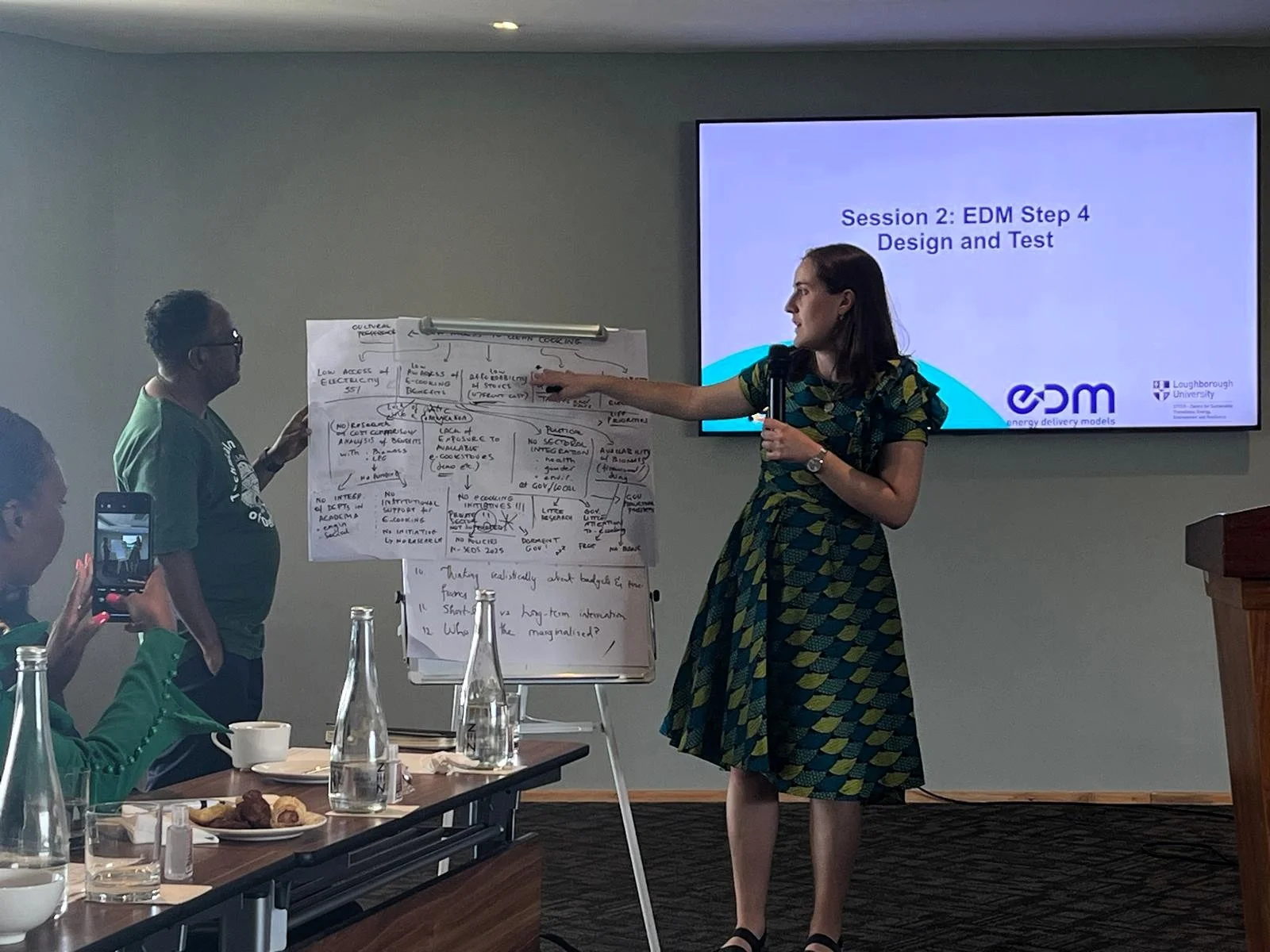
The second day focused on EDM’s Step 3 (Building Understanding). Much of the day centred on small-group work around needs, barriers and problem diagnosis. Country teams worked through problem trees and began outlining preliminary solution ideas. The workshop exercises asked participants to move carefully through the question of why low access to clean cooking persists, and how that pattern is reproduced through wider structural, social and institutional conditions. The problem-tree work was especially revealing. Across the groups, “low access to clean cooking” quickly expanded into a much richer set of issues: electricity access and reliability, appliance affordability, repair and after-sales gaps, uneven distribution networks, low awareness of eCooking benefits, poor-quality devices, weak policy support, limited local manufacturing, and deeply embedded cooking practices and preferences. Ethiopia’s discussion highlighted culinary specificity, especially a diet based on injera (the traditional flat bread), as a key barrier for energy users to transition to clean cooking solutions. The Malawi team concentrated on the underutilisation of mini-grids for eCooking, and traced the problem back to issues with tariffs affordability, upfront appliance costs, distribution costs, limited business models and low awareness. Tanzania’s analysis drew attention to electricity infrastructure, local manufacturing limits, and insufficient research and innovation in eCooking. Mozambique’s tree linked appliance and electricity costs to import dependence, low-quality products, monopoly supply structures and weak policy attention to eCooking. Creating these problem-trees helped the country teams to understand how different barriers cluster and reinforce one another.
The group work also began to connect diagnosis to possible interventions. Participants worked on solution ideas, likely beneficiaries and possible social or environmental implications. The workshop prompts encouraged them to think through how different groups would benefit, whether any groups might be negatively affected, and how delivery infrastructure, resources and partnerships would need to be configured. A more holistic conception of project design emerged from these discussions, whereby energy delivery was understood as a process involving social outreach, delivery actors, organisational capacity, financing, behaviour change and long-term support.
Day 3: Learning from practice at the TaTEDO-SESO and SESCOM demonstrator
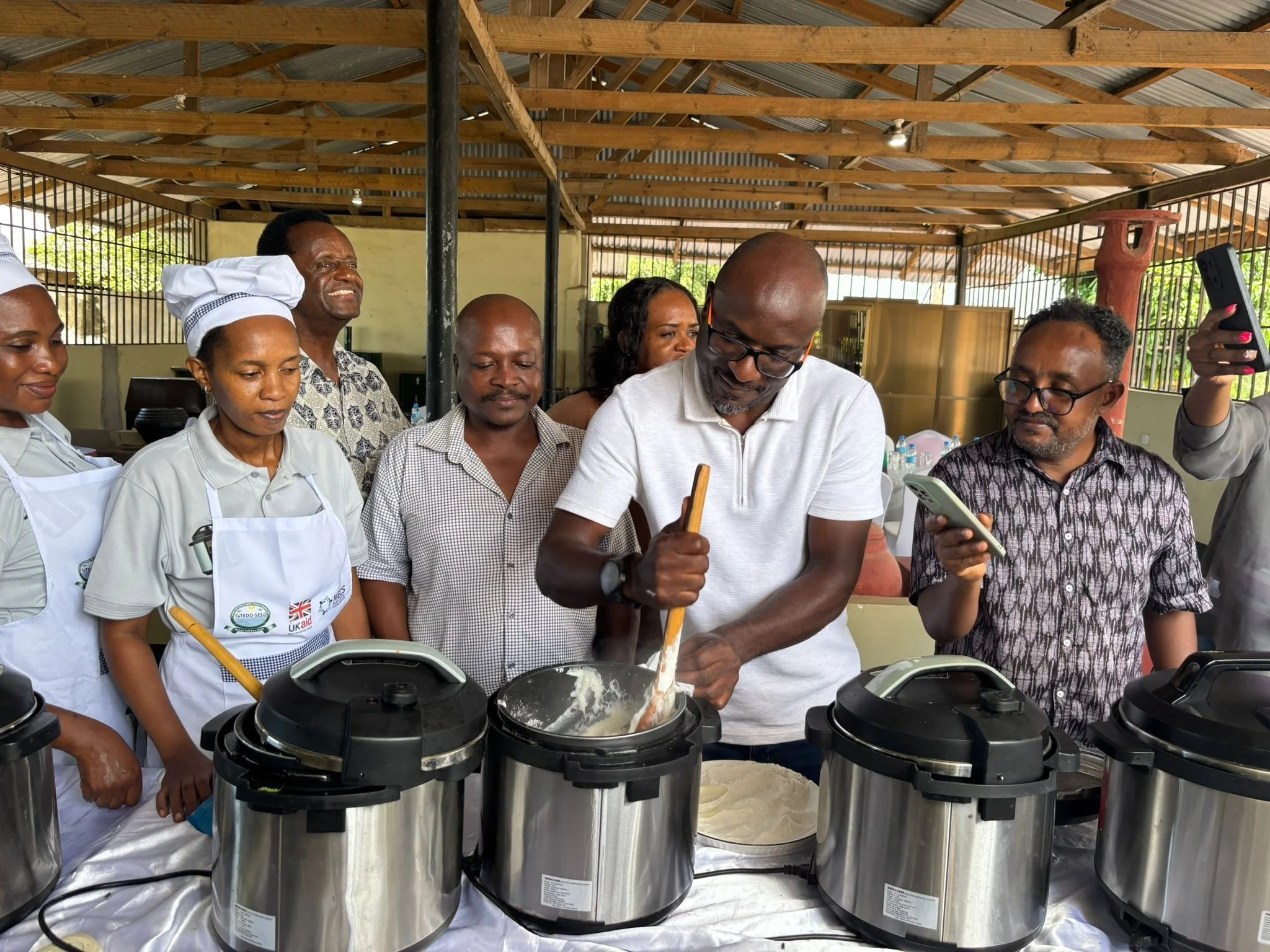
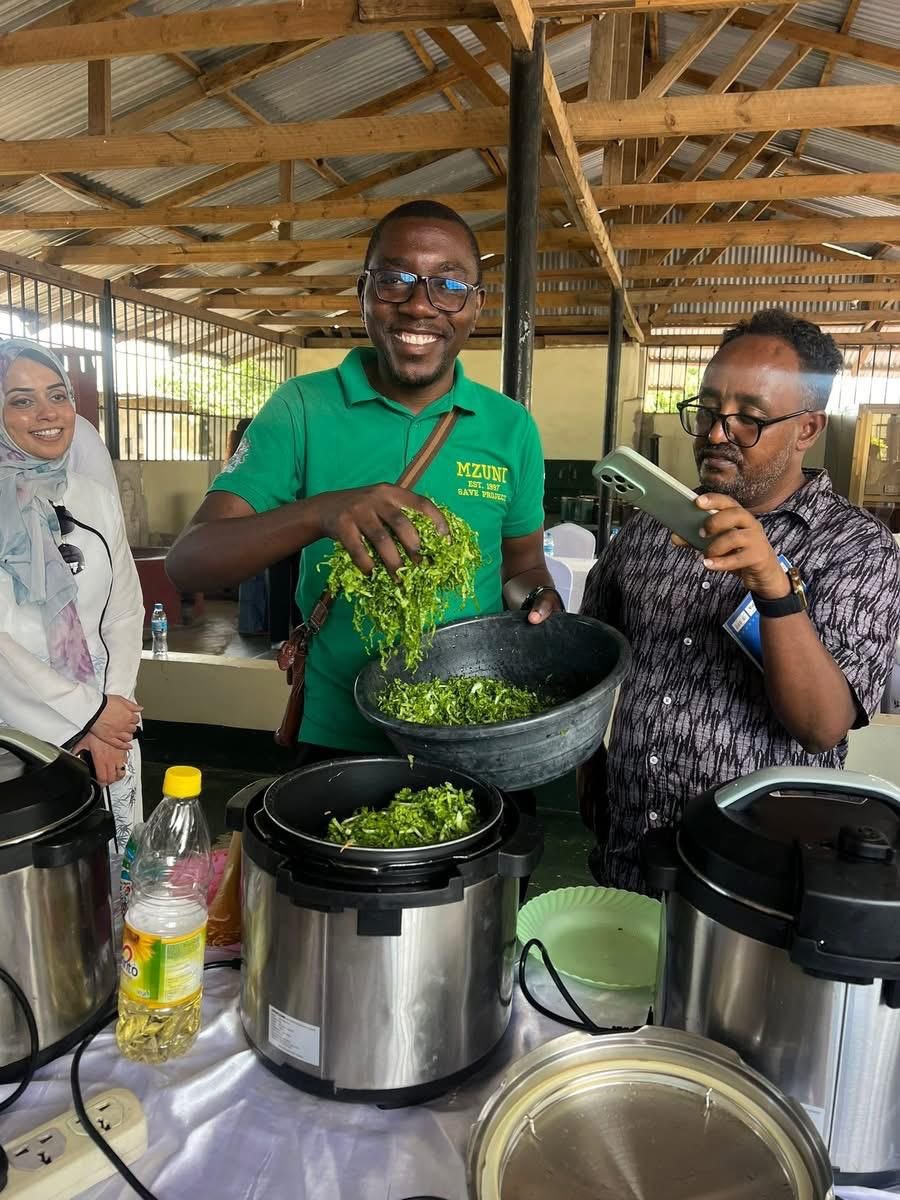
Day 3 shifted the workshop from conceptual analysis to an applied delivery case. The TaTEDO-SESO site visit offered a particularly rich example of delivery-model thinking in practice. Katarina Aloyce, manager of SESCOM, which is TaTEDO-SESO commercial branch, gave a presentation to explain the company e-cooking journey and market development. Katarina demonstrated how SESCOM went well beyond selling a simple appliance to build an entire delivery ecosystem around e-cooking, highlighting the socio-cultural and economic dimensions of delivery, including market research and user demand, developing products in response to local needs, investing in after-sales support and spare parts, partnering with women’s groups and other local networks, testing flexible payment approaches, and continued adaptation of products, training, and recipes for different users and contexts. SESCOM also identified several barriers to their own work: household decision-making dominated by men, low trust in new cooking technologies, the cultural embeddedness of charcoal and firewood, language barriers, affordability constraints, sub-standard products in the market, and the effects of grid unreliability on user confidence. Its responses have been equally multi-dimensional: group purchasing through VICOBA and SACCOS, product demonstrations, word-of-mouth through savings groups, translated manuals, customised appliances, tutorial videos and technician training. TaTEDO-SESO’s broader presentation reinforced the same lesson. Over the years, the organisation has linked eCooking promotion to research, pilot projects, awareness campaigns, cookbook development, institutional testing, financing innovations, after-sales services, policy advocacy and collaboration with utilities, entrepreneurs and women’s groups.
A particularly useful lesson from TaTEDO-SESO’s demonstrator visit concerned the relationship between learning and adaptation: it showed how product design evolved in response to user demand, that local dishes and cooking practices had to be taken seriously, and that demonstrations were central to trust-building and behaviour change. It also underlined the importance of infrastructure for scale-up: storage, working capital, service-provider networks, and the broader investment needed to move from promising business growth to wider reach- all critical delivery issues that seed-funded projects often struggle to surface early enough.
Read more about the visit to TaTEDO-SESO’s premises here: Advancing Inclusive eCooking for JUSTGESI Learning Visit to TaTEDO SESO/SESCOM
Day 4: Refining country plans and next steps
The final day focused on country presentations, with each team showcasing a more refined and detailed project plan based on the EDM learning. The Ethiopian team framed an eCooking diary study with low-income households in Mekelle as a foundation for understanding local awareness, appliance compatibility and future payment recommendations. The Malawi team proposal to work on the remote Chisi Island on Lake Chilwa combined mini-grid realities, women-led sales, local technicians and partnership-building with the mini-grid operator and EPC suppliers to pilot eCooking on the island. Mozambique’s presentation focused on a poor urban setting, where prefeasibility analysis, partner selection, stakeholder mapping and further contextual narrowing are needed to identify the most effective solution to deliver eCooking. Tanzania’s own proposal became markedly clearer around a specific test: whether a VICOBA-based delivery model can be intentionally adapted to reach poor households, female-headed households and people with disabilities through blended finance, targeted subsidies, inclusive outreach, monitoring, and after-sales support. The presentations made it clear that the teams had made significant progress in their project designs, with a much clearer understanding of action plans and next steps.
Key takeaways and lessons learned
Several broader lessons emerged across the four days:
A strong eCooking intervention requires a broader conception of energy delivery. Appliances matter, yet the workshop consistently pointed toward a wider system of enabling conditions: awareness, finance, repair, supply chains, social legitimacy, institutional support, training, and delivery partnerships. TaTEDO-SESO’s experience showed this especially clearly through its integration of distribution, VICOBA and SACCOS finance, after-sales services, technician training and user-centred adaptation. The same logic ran through the EDM framework itself, which places energy and non-energy barriers on the same analytical plane.
A bottom-up and participatory approach is indispensable for GESI-oriented energy planning. EDM’s emphasis on stakeholder engagement, disaggregated baseline work, focus group discussions, key informant interviews and community-level needs assessment offers a practical route for building participation into project design. The workshop discussions repeatedly returned to the need to hear directly from users, especially where marginalisation is intersectional or locally specific. The same principle was visible in the Tanzanian demonstrator case, where demonstrations, savings-group engagement and iterative product adaptation have all been shaped by close interaction with users.
Needs assessment as a critical methodological stage. Several of the country teams began with partially formed intervention ideas. Over the course of the workshop, the importance of deeper needs assessment became much more explicit: understanding marginalisation, identifying vulnerability levels, affordability constraints, accessibility requirements for people with disabilities, cooking practices, social norms, electricity access, and the readiness of delivery actors themselves. Tanzania’s project proposal expressed this particularly well in its distinction between demand-side and supply-side assessment, and in its plan to use evidence on vulnerability and accessibility to shape targeting, financing and delivery mechanisms.
User feedback and adaptation are central to successful transition pathways. The TaTEDO-SESO and SESCOM case showed sustained learning from cooking diaries, demonstrations, customer preferences, requests for design modification, and the everyday realities of local dishes and household routines. That same logic informed the feedback to country teams. Ethiopia’s project, for example, acquired sharper justification by framing the diary study as groundwork for understanding compatibility and future payment pathways. Malawi’s mini-grid proposal benefited from greater attention to the actual categories of end users and the mechanics of reaching them.
Fair and inclusive financing models sit at the core of sustainable energy transitions. Flexible payment options, group lending, targeted subsidies, on-bill financing, and affordability-sensitive design appeared repeatedly throughout the workshop and the demonstrator visit. SESCOM’s presentation showed how cash sales alone would provide only partial reach, while VICOBA and SACCOS financing, layaway, and utility-linked repayment have expanded access. The Tanzania seed proposal then translated that lesson into a more explicit blended-finance model designed to test subsidies, instalments and group-based finance for different user groups.
The Tanzania Learning Exchange created a structured space for translating broad commitments on justice, gender equality and social inclusion into more rigorous thinking about users, barriers, delivery pathways and evidence needs. The coming months will determine how those insights are carried into country-level needs assessments, partnership-building, pilot design and implementation.
