
Institutional Ethnography for Just Energy Transitions: JustGESI Research Presented at the European Sociological Association Conference in Warsaw
Sangita Thebe Limbu, JustGESI Postdoctoral Research Associate at the Urban Institute, University of Sheffield, presented research from the JustGESI project at the 17th European Sociological Association (ESA) Conference, held in Warsaw, Poland, from 25 to 28 August 2026.
Hosted by the Warsaw University of Life Sciences (SGGW), the conference brought together researchers from sociology and related disciplines across Europe and beyond to share their work and discuss emerging developments in the social sciences.
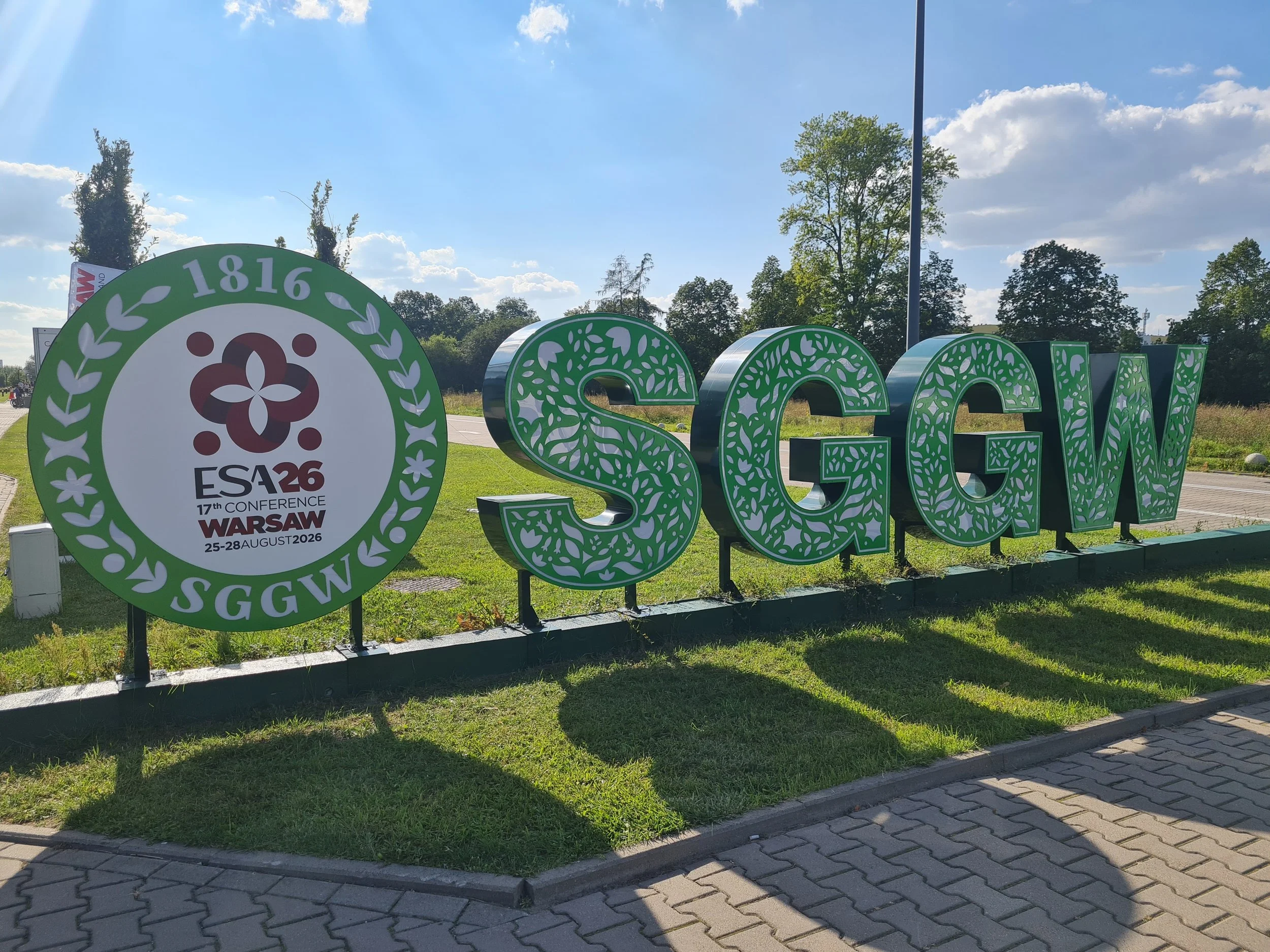
Photo Credit - Sangita Thebe Limbu
Sangita's presentation was part of the panel Institutional Ethnography: Ontological and Methodological Considerations, chaired by Morena Tartari and Órla Meadhbh Murray from Northumbria University.
Her presentation, co-authored with JustGESI Principal Investigator Professor Vanesa Castán Broto, titled Using Institutional Ethnography to Examine Gender Equality and Social Inclusion in Just Energy Transitions in the Global South, explored how Institutional Ethnography can help researchers better understand how commitments to gender equality and social inclusion are translated into practice within energy sector organisations.
Drawing on work undertaken through the JustGESI project, the presentation introduced JustGESI’s Institutional Ethnography methodological framework developed by the project’s Work Package 2 team to study the structural drivers of discrimination and exclusion in energy policies and organisational practices across Ethiopia, Malawi, Mozambique and Tanzania.
Institutional Ethnography (IE), first developed by sociologist Dorothy E. Smith, starts from people's everyday experiences and work practices and explores how these are shaped by wider institutional processes. While the approach has been widely used in North America and Europe, its application in Global South contexts remains relatively limited.
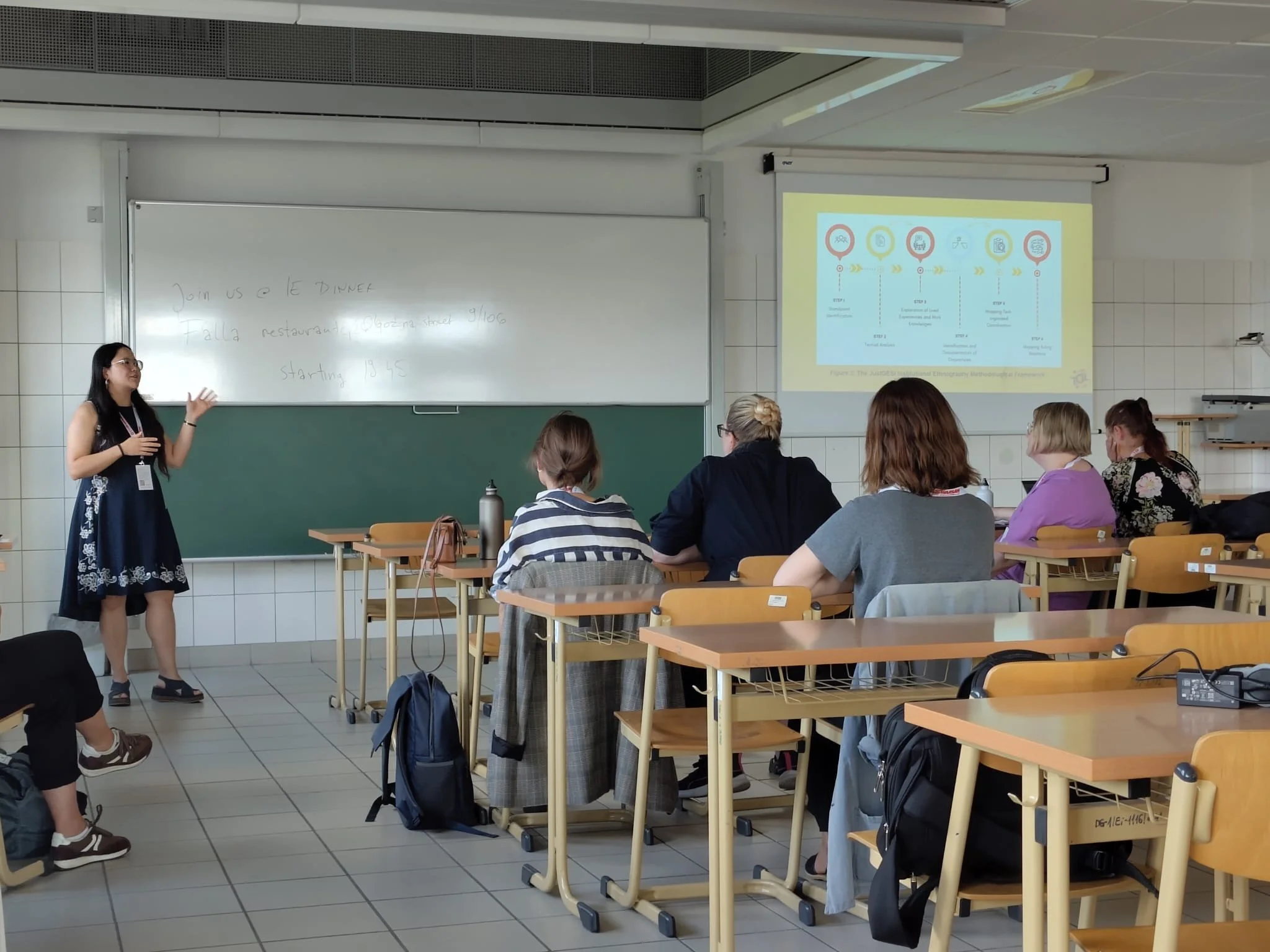
JustGESI researcher Sangita Thebe Limbu presenting at the ESA conference.
Sangita reflected on the opportunities and challenges of adapting the methodology for comparative research across diverse political, institutional, cultural and geographical settings. The presentation highlighted the balancing act involved in conducting inductive, grounded research while also developing a shared framework that allows meaningful comparison across countries. It also explored the challenges of working across disciplinary boundaries and communicating IE as a methodology to researchers and stakeholders who may be less familiar with this approach.
Reflecting on the experience of presenting at the conference, Sangita said:
“One of the most rewarding aspects of the JustGESI project has been exploring how Institutional Ethnography can be adapted to different contexts to better understand how institutions work, how they shape people’s everyday experiences, and what meaningful institutional change might look like. At the same time, Institutional Ethnography reminds us to remain grounded in people’s everyday work, knowledge and experiences, ensuring that the research remains meaningful to those most affected by these institutional processes. The conference was a valuable opportunity to share our methodological framework, emerging findings, receive thoughtful feedback from the Institutional Ethnography research community, and learn from researchers using the methodology across a wide range of fields and settings.”
The presentation generated positive discussion among conference participants and provided an opportunity to engage with scholars working with Institutional Ethnography in different disciplinary and geographical contexts. The event also enabled the team to build new connections, exchange ideas, and contribute to ongoing conversations about methodological innovation in research on gender, inclusion, and energy justice.
For the JustGESI project, participation in the ESA conference was an important opportunity to showcase emerging research findings and strengthen engagement with an international network of scholars exploring how institutions shape people's everyday lives and experiences.
