
JustGESI Researchers Highlight Inclusive Approaches to Just Energy Transitions at the RGS-IBG Conference 2026
Researchers from the JustGESI project brought critical discussions on gender equality, disability and social inclusion (GEDSI) in energy transitions to the forefront at the Royal Geographical Society-Institute of British Geographers (RGS-IBG) Annual International Conference 2026.
Held in London at the Royal Geographical Society and Imperial College London, as well as online, from 1 to 4 September 2026, the conference brought together researchers from the UK and beyond to explore pressing social and environmental challenges.
The JustGESI team organised a panel titled: What does Gender Equality, Disability, and Social Inclusion mean for a just energy transition? An exploration from feminist and decolonial perspectives.
Chaired by JustGESI Principal Investigator Vanesa Castán Broto from the Urban Institute at the University of Sheffield, the session drew on insights generated across the JustGESI project in Ethiopia, Malawi, Mozambique and Tanzania to examine what a GEDSI-transformative approach to energy transitions might look like in practice.
A central theme running through the panel presentations was the need to move beyond narrow understandings of inclusion. Rather than focusing solely on gender-disaggregated data or targeted participation initiatives, panellists argued that a just energy transition requires attention to the deeper institutional, social and political structures that shape inequalities. Drawing on feminist and decolonial perspectives, the panel presentations explored who benefits from energy transitions, whose knowledge counts, and how existing power and institutional relations continue to influence access to energy, education and decision-making.
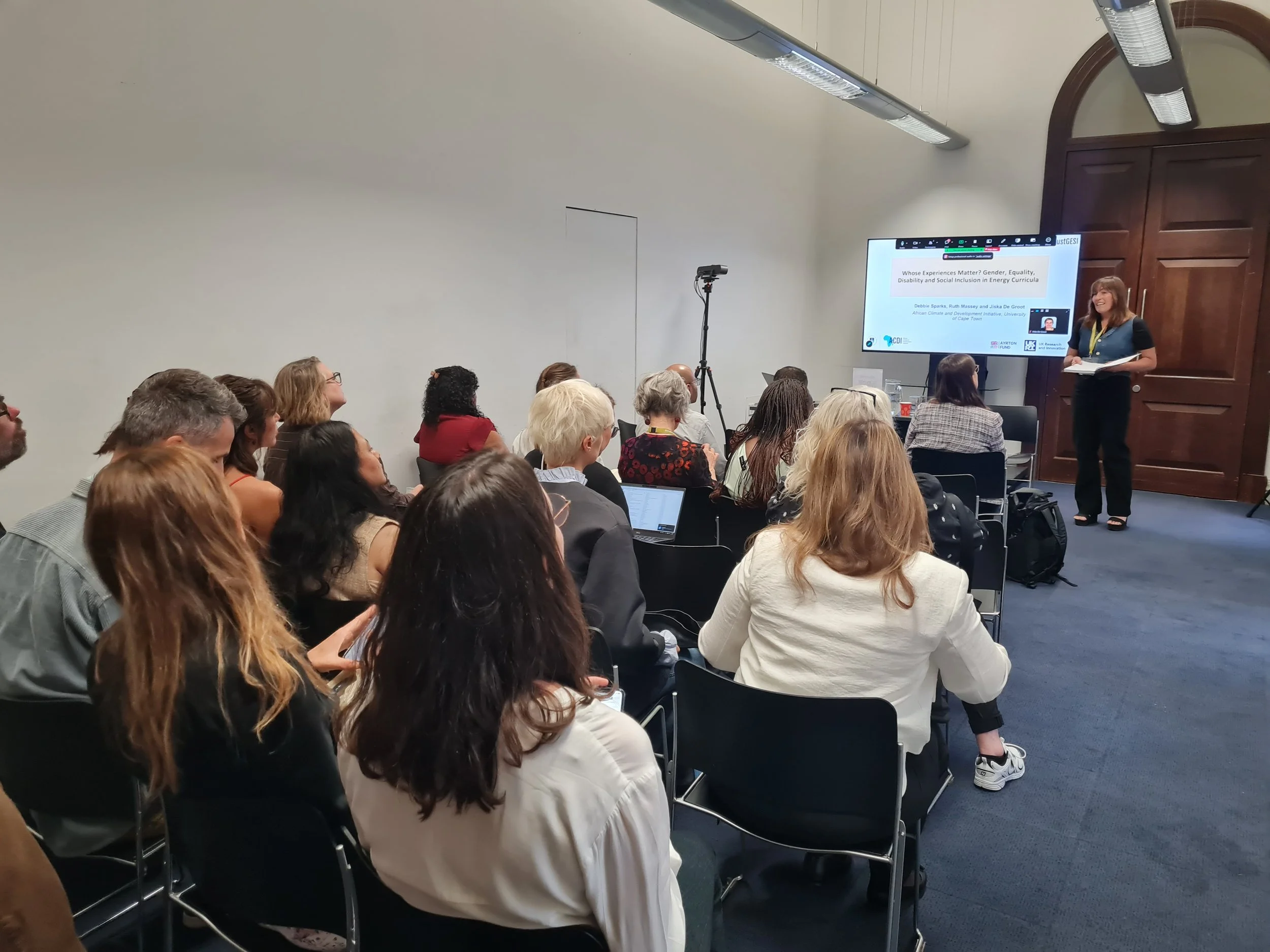
JustGESI panel on Gender Equality, Disability, and Social Inclusion (GEDSI) for just energy transitions at the RGS-IBG Annual International Conference 2026 (All photos provided by the JustGESI team)
Inclusive energy access innovation ecosystems
Jiska de Groot from the University of Cape Town presented a paper titled: Just energy transitions and the need for inclusive energy access innovation ecosystems.
Drawing on more than a decade of research across sub-Saharan Africa, including the Transforming Energy Access Learning Partnership, the ENERGIA gender and energy research programme and the JustGESI project, the presentation argued that piecemeal interventions are insufficient to address persistent inequalities in energy access.
The presentation highlighted the need for systemic transformation across energy access innovation ecosystems, including institutions, governance approaches and knowledge systems. The paper concluded that achieving both Sustainable Development Goal 5 on gender equality and Sustainable Development Goal 7 on affordable and clean energy requires not only scaling energy access solutions but also transforming the systems through which these solutions are designed, financed, delivered and legitimised.
Understanding barriers to energy and engineering education
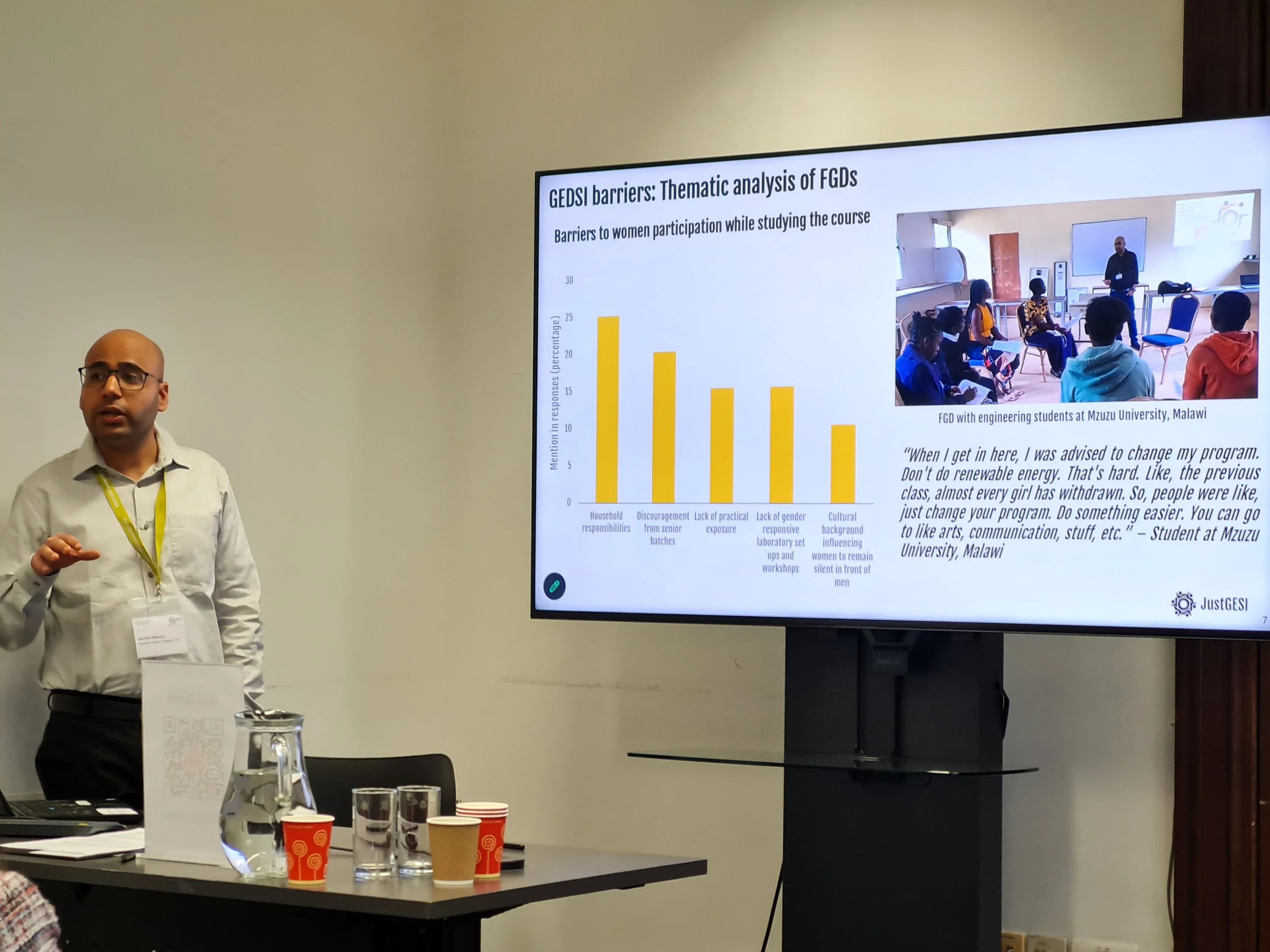
Harshit Vallecha from Sheffield Hallam University presenting the findings from the JustGESI study on GEDSI barriers in engineering education.
Harshit Vallecha, presenting work co-authored with Mulualem Gebreslassie from Sheffield Hallam University, shared findings from their JustGESI study titled: Understanding GEDSI barriers in accessing energy and engineering education for delivering a Just Energy Transition: Insights from Ethiopia, Malawi, Mozambique, and Tanzania.
The research examined barriers experienced by women and marginalised groups in accessing energy and engineering education. Based on survey data and focus group discussions with higher education professionals and students across the four countries, the study identified various social, economic and cultural barriers that contribute to underrepresentation in engineering education.
The findings further revealed how barriers intersect with factors such as gender, class, ethnicity, disability, religion and income levels. The presentation proposed strategies and policy recommendations to address these challenges and support the development of tailored training programmes for women technicians and aspiring clean energy entrepreneurs. It also highlighted opportunities for tackling skills gaps within existing energy and engineering curricula.
Whose energy transition?
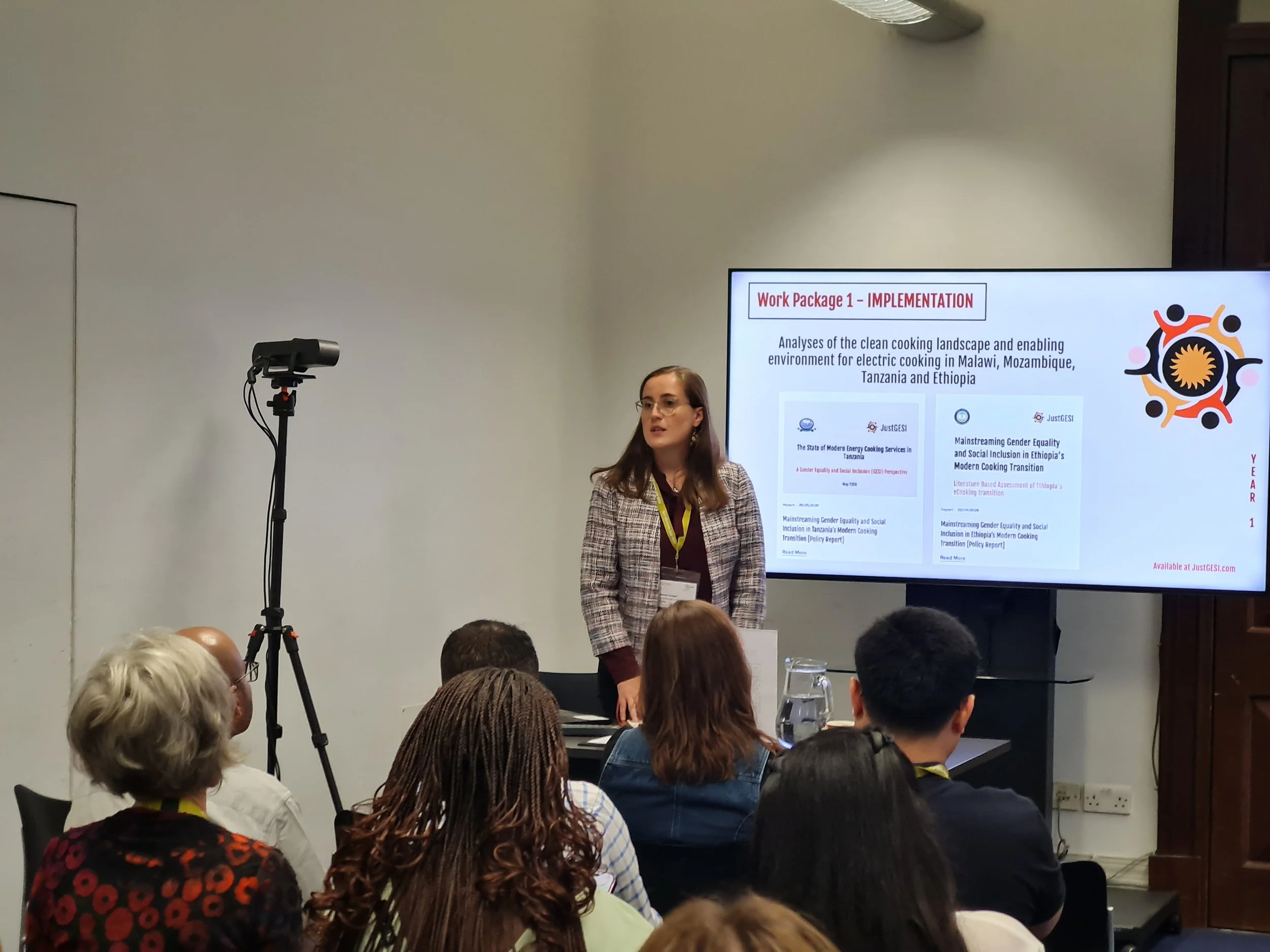
Serena Saligari from Loughborough University presenting the findings from the JustGESI study on electric cooking landscape through a GEDI lens.
Serena Saligari from Loughborough University presented Whose energy transition? Mapping electric cooking through a GEDSI lens in Malawi, Mozambique, Tanzania and Ethiopia, sharing findings from Work Package 1 of the JustGESI project.
WP1 conducted landscape analyses to examine how policy, infrastructure, markets and socio-cultural factors shape the uptake of electric cooking across the four countries. While electric cooking is frequently presented as a solution that can simultaneously deliver climate, health and gender equality benefits, the landscape reviews, now available on the JustGESI website, found uneven infrastructural readiness and highly differentiated energy transition pathways. They also identified country-specific challenges, including low and unreliable electricity supply, affordability constraints, limited financing mechanisms, policy fragmentation and a persistent gap between high-level GEDSI commitments and implementation realities. The presentation emphasised that a GEDSI-transformative energy transition requires addressing structural inequalities within energy governance, labour markets and knowledge production, rather than relying solely on technology deployment or gender-focused targets.
Rethinking energy curricula through a GEDSI lens
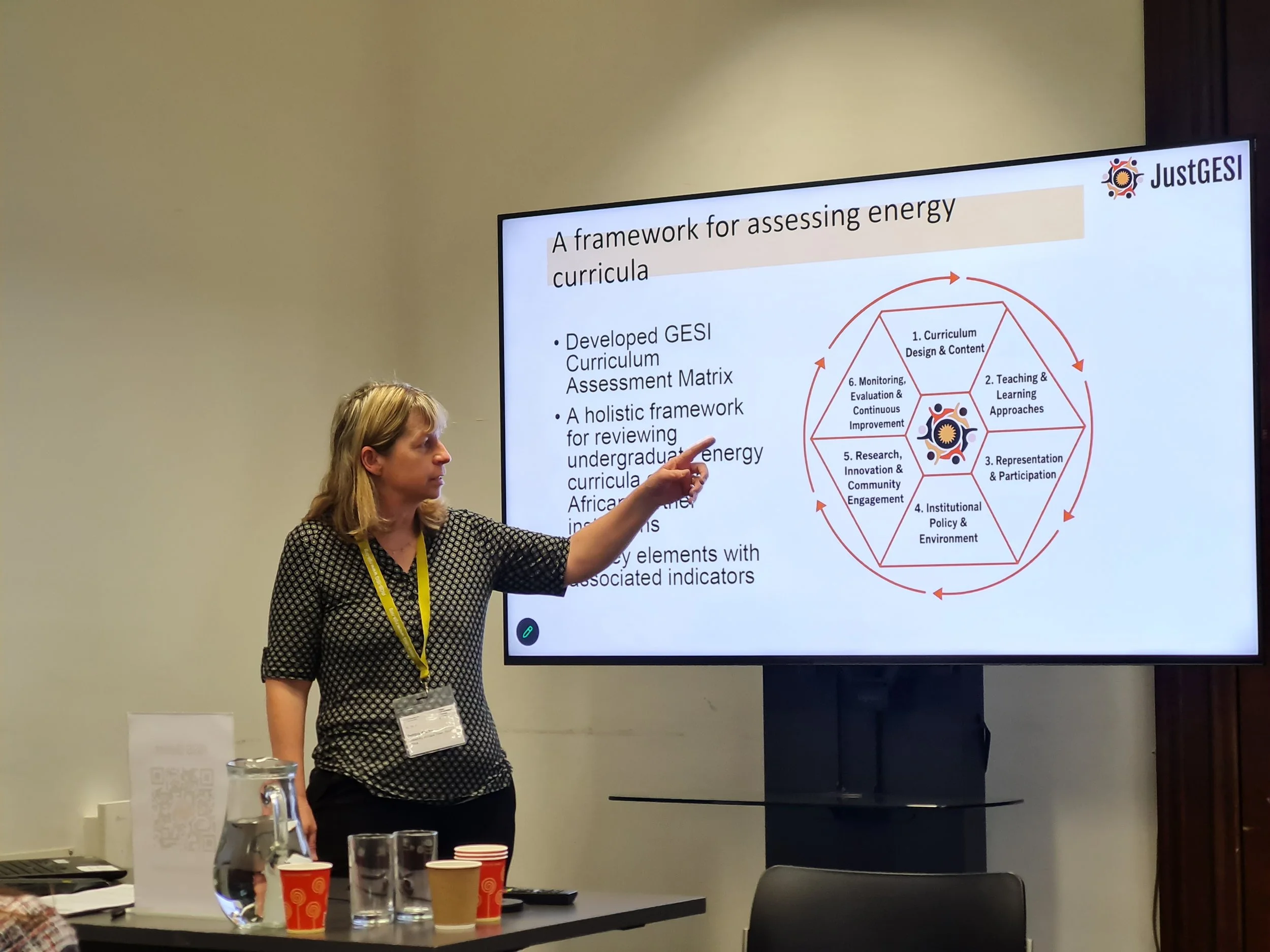
Debbie Sparks from the University of Cape Town presenting the JustGESI study on assessing and designing energy curricula through GEDSI lens.
Debbie Sparks, presenting work co-authored with Ruth Massey and Jiska De Groot from the University of Cape Town, explored the role of higher education through their presentation Whose Experiences Matter? Gender, Equality, Disability and Social Inclusion in Energy Curricula.
The presentation highlighted the challenges of designing and assessing energy curricula that meaningfully incorporate GEDSI principles. The presentation introduced a proposed assessment matrix intended to support curriculum design and review by encouraging critical reflection on whose knowledge is valued, whose experiences are recognised and which learning pathways are supported.
The proposed framework aimed to help institutions identify embedded biases in teaching approaches and assessment practices while supporting the development of a more diverse energy workforce and advancing equitable access to energy.
Mapping power in energy institutions
Sangita Thebe Limbu from the Urban Institute, University of Sheffield presented Mapping Power: An Institutional Ethnography Framework for Advancing Gender Equality, Disability, and Social Inclusion in Energy Transitions.
The presentation outlined how the JustGESI project is adapting Institutional Ethnography, a feminist research strategy developed by sociologist Dorothy E. Smith, to investigate how institutional processes shape everyday work practices and experiences within the energy sector.
The presentation highlighted how by examining the role of texts such as forms, guidelines, reporting systems, policies and everyday organisational work practices, the study sought to uncover the often hidden social relations that reinforce inequalities. The presentation also reflected on how Institutional Ethnography, originally developed and most widely applied in Global North contexts, could be adapted to Global South settings, where diverse bureaucratic traditions and the legacies of colonial governance continue to shape how knowledge, evidence and social differences are understood within institutions.
Engaging discussions on inclusion and energy futures
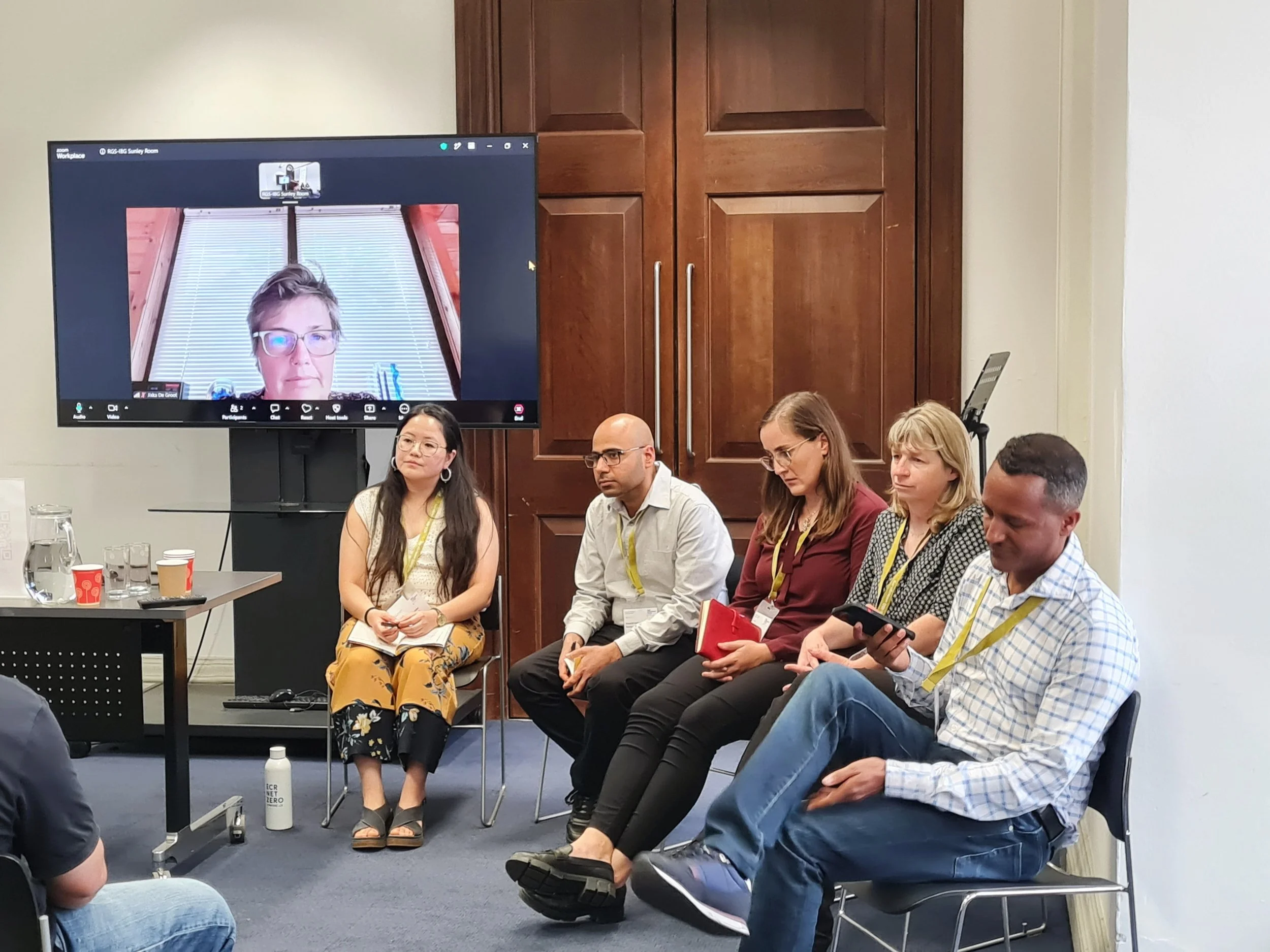
JustGESI team members participating in the Q&A session following their presentations.
The panel generated lively discussion among conference participants, which ranged from women's participation in different energy and engineering fields to strategies for increasing representation in STEM education and careers. Participants also reflected on how social and gender norms shape perceptions of STEM subjects and discussed opportunities for rethinking curricula across different educational and national contexts.
Across discussions on energy access, engineering education, electric cooking, curriculum design and institutional change, a common message emerged: a just energy transition cannot be achieved through technology alone. It requires sustained attention to the power relations, social norms and institutional structures that determine who participates, whose knowledge is valued and who benefits from the energy transition. The strong engagement from attendees demonstrated growing recognition that GEDSI-informed approaches are not an optional addition to energy transition discourses and practices, but a fundamental part of building more equitable and sustainable energy futures.
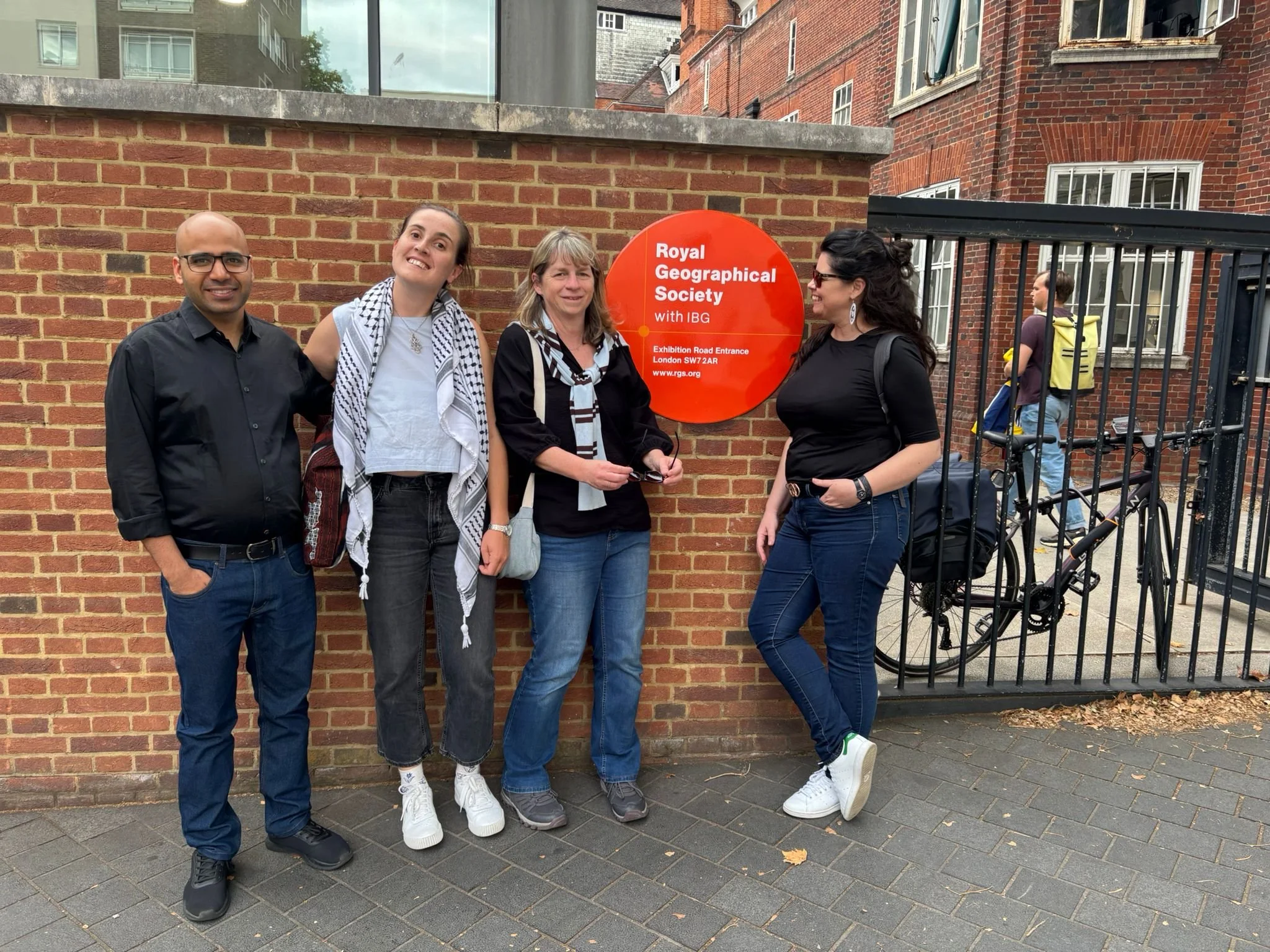
JustGESI team members at the RGS-IBG Annual International Conference 2026 held in London.
