
Written by: Dr Sangita Thebe Limbu, JustGESI Postdoctoral Research Associate, The Urban Institute, The University of Sheffield
In research, the process through which knowledge is generated is just as important as the findings themselves. When we broaden our ways of knowing, we open up new possibilities for what can be known and begin to address the forms of invisibility and unequal power relations that have long shaped research practice. This is why conversations about methodology and the epistemological commitments behind them matter. They determine not only how we conduct research, but also what becomes possible to know and whose perspectives and realities are rendered (in)visible.
The first JustGESI XChange event of 2026, titled Feminist Ways of Knowing: From Institutional Ethnography to Ethnography in Practice, continued this conversation by exploring how we might broaden our methodological repertoires and make space for different ways of knowing and doing research. This online seminar formed part of the wider JustGESI XChange Series, a platform dedicated to fostering knowledge sharing, collective learning, and critical dialogue on justice-oriented approaches to global energy transitions.
In this session, Dr Órla Meadbh Murray from Northumbria University and Dr Serena Saligari, Postdoctoral Research Associate on the JustGESI project at Loughborough University, offered generous and insightful reflections on their methodological practices. While both draw on feminist scholarship, they work from different locations: Órla through Institutional Ethnography and Serena through anthropological ethnography.
Their presentations highlighted two distinct yet complementary research approaches, illustrating how feminist methodological commitments shape the everyday work of research and how these commitments are grounded in care, relationality, and a wider political orientation toward change and transformation.
This article provides a brief overview of their presentations and reflects on how these distinct yet connected approaches contribute to our understanding of different ways of knowing and doing research.

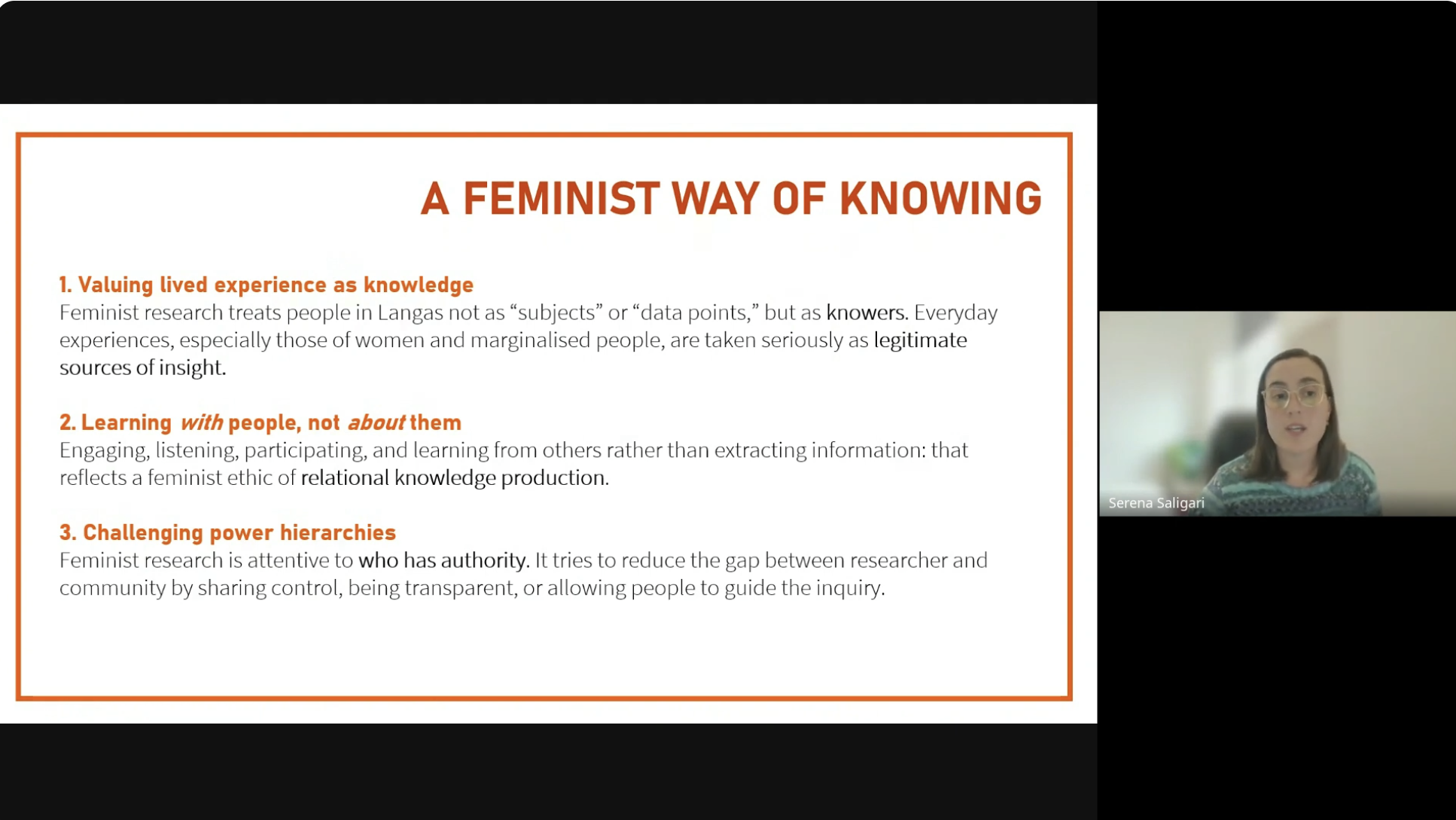
Fig 1. Dr Órla Meadbh Murray and Dr Serena Saligari presented their research and methodological practices as part of the JustGESI XChange series on 13 January 2026. Featured here are Órla’s recent publication and a selected slide from Serena’s presentation.
Tracing University Audit Cultures through Institutional Ethnography
Órla’s presentation drew on her recent book University Audit Cultures and Feminist Praxis: An Institutional Ethnography (2025), which examines how audit processes organise the everyday work of academics in UK higher education. Institutional Ethnography, developed by sociologist Dorothy E. Smith, is a feminist research strategy that explores how people’s everyday activities and experiences are coordinated through social relations, often mediated by texts. Rather than beginning from a conceptual or theoretical problem, research inquiry in Institutional Ethnography starts from people’s lived experiences and the issues they encounter, treating them as knowledgeable subjects. Institutional Ethnography’s analytical strength lies in tracing these often hidden relations and revealing how systems of inequality are organised and reproduced, thereby creating possibilities for change.
Órla illustrated this approach through their study of university audit culture. Órla’s research project began from their standpoint as a PhD student and early career academic, when concerns about audit surfaced repeatedly in informal conversations, meetings, and professional networks. These everyday encounters became the starting point of their inquiry. Guided by Institutional Ethnography, Órla developed a three‑part methodological strategy: examining key texts, mapping institutional processes, and analysing textually mediated discourse.
Órla focused on three key audit mechanisms (the National Student Survey, the ESRC research grant application, and the Research Excellence Framework) and traced how these texts circulated through meetings, emails, teaching practices, grant writing, and other academic activities. Órla also showed how interpretations of audit requirements shaped expectations and practices even among those who had never read the documents. Through this work, Órla demonstrated how Institutional Ethnography makes visible the social relations that structure audit cultures, and how this understanding can support efforts to scrutinise and transform institutional practices.

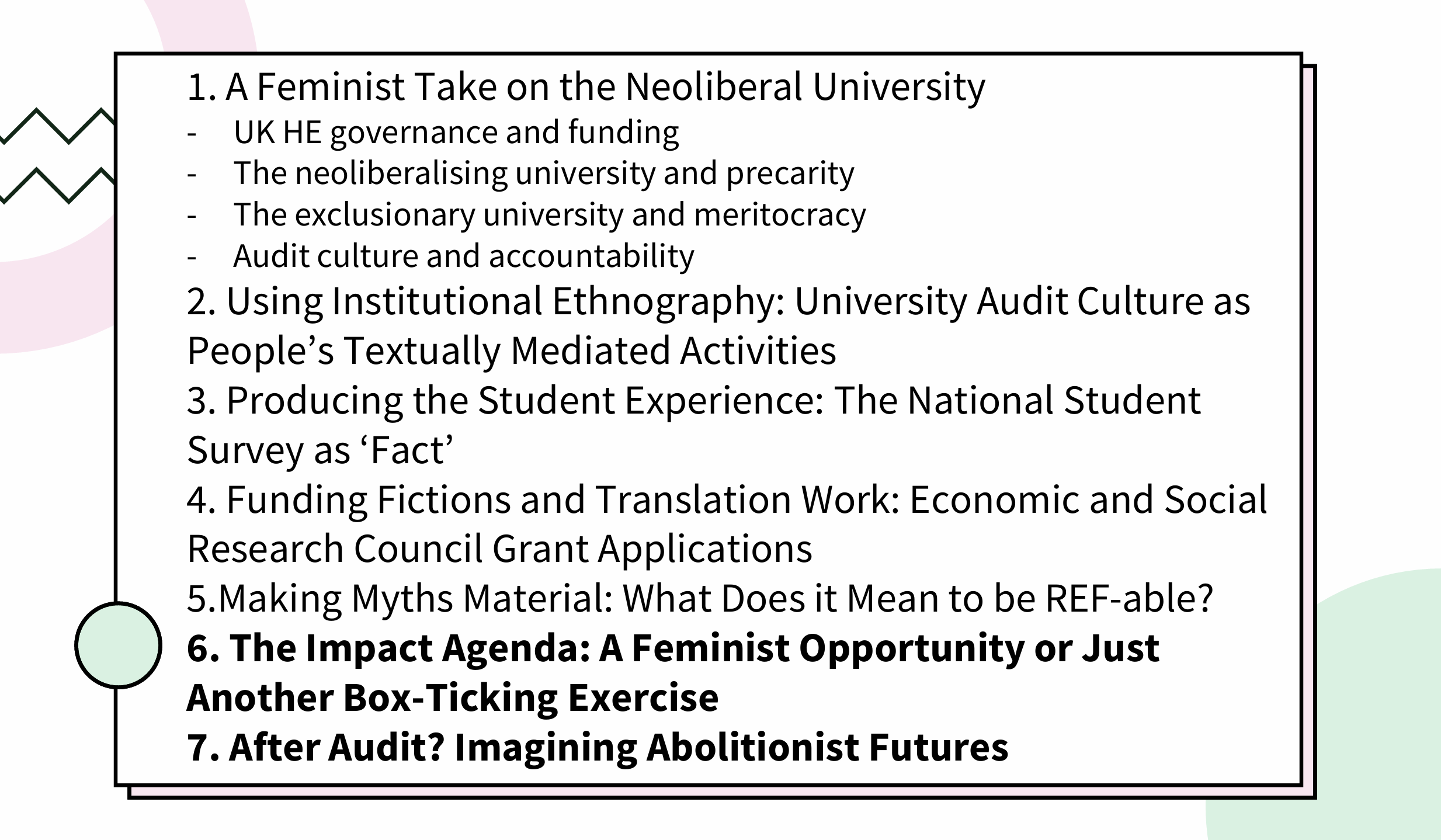
Fig. 2. Selected slides shared by Órla’s during their presentation
Ethnography in Practice: Immersion, Uncertainty, and Reciprocity
Serena’s presentation reflected on how her practice of doing ethnography in Langas, an informal settlement of Kenya, was shaped by feminist values and commitments toward care and collaboration. Drawing on her doctoral fieldwork in 2021, which was dedicated to exploring local cooking practices, Serena emphasised that ethnography is not merely a research method but an immersive and relational process relying on long‑term engagement and embeddedness within a community. Ethnographic work requires trust, patience, and continuous ethical negotiation. These demands were heightened during the COVID‑19 pandemic, which introduced additional uncertainty and placed greater responsibility on safeguarding her own wellbeing and that of her interlocutors and collaborators.
Serena’s presentation was organised around key words chosen to evoke the deep nature of doing ethnography in practice. For example, terms such as apprenticeship, intellectual humility, and loneliness were juxtaposed with more traditional ethnographic concepts such as participation and cultural relativism. Serena also reflected on how her positionality as a white Western female researcher shaped access, interactions, expectations, and ethical decisions in the field. Serena further highlighted the emotional and relational labour that underpins ethnographic practice, which is often obscured by the presumed light-hearted sense of adventure associated with stereotypical ideas of what ethnographers do in the field.
In ethnography, building relationships over months requires presence, reciprocity, and a willingness to sit with uncertainty and vulnerability. While these challenges were intensified during COVID‑19, sustained engagement and close collaboration with local partners enabled the development of rapport with participants, while also creating the conditions for serendipitous encounters, unexpected intellectual insights, and moments of shared learning to emerge. These unfolded through everyday moments, from navigating community spaces to working alongside her interlocutors in their kitchens. The commitment to collaboration was reflected in her use of ‘we’ in her doctoral thesis to honour and recognise the collective nature of fieldwork and knowledge production.
Serena’s reflections reminded us that ethnography attends not only to social and political dynamics but also to the sensorial, emotional, and mundane spaces where everyday life unfolds. It seeks to understand how people make sense of their worlds rather than impose predefined definitions and concepts and produce grounded knowledge that is responsive to people’s needs.

Fig. 3. Selected slide shared by Serena during her presentation
Watch Serena’s presentation:
The full recording of Serena’s presentation is available through this link.
What Institutional Ethnography and Ethnography Teach Us About Feminist Ways of Knowing
Taken together, Órla’s and Serena’s presentations highlight how different methodological approaches can advance feminist ways of knowing. Although Institutional Ethnography and conventional ethnography begin from distinct questions and orientations, both resonate strongly with core feminist epistemological commitments. Central among these is a commitment to valuing lived experience. Both approaches treat people as knowledgeable about their own lives and capable of generating insight, rather than as passive subjects of analysis. This attentiveness to situated knowledge challenges hierarchical assumptions about expertise and foregrounds the everyday as a critical site of understanding.
Both methodologies also draw attention to the mundane and often overlooked aspects of social life. Órla’s work showed how power is embedded in routine documents, conversations, and institutional practices that shape what academics do and how they must act. Serena, through her immersive fieldwork, demonstrates how daily routines, sensory experiences, and relational encounters structure how people navigate their worlds and make decisions, including choices about cooking and energy use. In both cases, the ordinary is never trivial. It is a key site in which power is lived, negotiated, and contested.
While there are clear resonances, there are also important distinctions. Ethnography prioritises understanding meaning from the inside. It asks how people themselves interpret concepts, practices and relations, resisting predefined or externally imposed definitions. Institutional Ethnography extends this attention to lived experience by tracing how those experiences are coordinated by broader organisational and translocal relations. In doing so, Institutional Ethnography maps and brings into view the texts, processes, and structures that shape everyday life but often remain invisible. These analytical orientations are different but complementary.
Both approaches also carry explicit commitments to change and transformation. Institutional Ethnography’s roots in feminist politics give it a clear orientation towards challenging and changing the institutional conditions it uncovers. Feminist ethnography similarly requires continuous reflection on power, extraction, and accountability, asking researchers to consider the ethical and political implications of their presence and their claims. Together, these commitments highlight that feminist methodologies are not only analytic tools but practices of care, responsibility, and relational engagement.
Seen together, ethnography and Institutional Ethnography offer a fuller picture of how power operates across scales. Ethnography provides depth, immersion, and grounded narratives, while Institutional Ethnography traces the institutional and organisational forces that coordinate those everyday experiences through texts and text‑mediated discourses and practices. Bringing these perspectives into dialogue reveals how power is lived, felt, reproduced, and resisted in both intimate and structural ways. This methodological pluralism opens up possibilities for richer, more nuanced, and more accountable feminist scholarship that strengthens our collective capacity to understand and transform the worlds we study.
Further Reading
If you would like to explore the speakers’ work or learn more about the methodological approaches discussed, here are some helpful readings:
Murray, Órla Meadhbh, 2022. Text, Process, Discourse: Doing Feminist Text Analysis in Institutional Ethnography, International Journal of Social Research Methodology, 25(1), pp. 45-57. Available at: https://doi.org/10.1080/13645579.2020.1839162
Murray, Órla Meadhbh. 2025. University Audit Cultures and Feminist Praxis: An Institutional Ethnography. Bristol University Press.
Murray, Órla Meadhbh, 2025. Dorothy Smith: Making the Ontological Shift. In: M. Kusenbach & M. Pfadenhauer (eds), Handbook of Interpretive Research Methods in the Social Sciences, pp. 472-487
Murray, Órla Meadhbh, 2026. Unequal Bureaucracies in Practice: Analysing Documents Using Institutional Ethnography. In: A. Grant & H. Kara (eds), Using Documents in Research: When, Where, Why and How. pp. 115-128..
Saligari, Serena. 2024. Energy Transitions, Local Tradition. Health, Gender, and Household Energy Practices in Kenya. University of Liverpool [PhD dissertation]. Available at: https://www.proquest.com/openview/7d193a6c73616a26c4d1d8e8c764c798/1?pq-origsite=gscholar&cbl=2026366&diss=y
Smith, Dorothy E. 1988. The Everyday World as Problematic. Toronto: University of Toronto Press.
Smith, Dorothy E. 2005. Institutional Ethnography: A Sociology for People. Lanham, MD: Alta Mira Press.
Note: For further information on Institutional Ethnography, including events and training, please visit the UK & Ireland Institutional Ethnography Network (IEN) website: https://www.institutionalethnographynetwork.org/
